14. General-purpose I/Os (GPIO)
14.1 GPIO introduction
Each general-purpose I/O port has four 32-bit configuration registers (GPIOx_MODER, GPIOx_OTYPER, GPIOx_OSPEEDR and GPIOx_PUPDR), two 32-bit data registers (GPIOx_IDR and GPIOx_ODR), a 16-bit reset register (GPIOx_BRR) and a 32-bit set/reset register (GPIOx_BSRR).
In addition, all GPIOs have a 32-bit locking register (GPIOx_LCKR), two 32-bit alternate function selection registers (GPIOx_AFRH and GPIOx_AFRL), and a secure configuration register (GPIOx_SECCFGR).
14.2 GPIO main features
- • Output states: push-pull or open drain + pull-up/down
- • Output data from output data register (GPIOx_ODR) or peripheral (alternate function output)
- • Speed selection for each I/O
- • Input states: floating, pull-up/down, analog
- • Input data to input data register (GPIOx_IDR) or peripheral (alternate function input)
- • Bit set and reset register (GPIOx_BSRR) for bitwise write access to GPIOx_ODR
- • Lock mechanism (GPIOx_LCKR) provided to freeze the I/O port configurations
- • Analog function
- • Alternate function selection registers
- • Fast toggle capable of changing every two clock cycles
- • Highly flexible pin multiplexing allows the use of I/O pins as GPIOs or as one of several peripheral functions
- • TrustZone® security support
14.3 GPIO implementation
Table 112. GPIO implementation
| Device | GPIOA | GPIOB | GPIOC | GPIOH |
|---|---|---|---|---|
| STM32WBA55xx GPIO port pins | [15:0] | [15:11, 9:0] | [15:13] | [3] |
| STM32WBA54xx GPIO port pins | [15:5, 3:0] | [15:0] | [15:13] | [3] |
| STM32WBA52xx GPIO port pins | [15:5, 3:0] | [15:0] | [15:13] | [3] |
| STM32WBA50xx GPIO port pins | [15:12, 8:5, 2:0] | [15, 12, 9:8, 4:3] | [15:14] | [3] |
14.4 GPIO functional description
Subject to the specific hardware characteristics of each I/O port listed in the datasheet, each port bit of the GPIO ports can be individually configured by software in several modes:
- • Input floating
- • Input pull-up
- • Input pull-down
- • Analog
- • Analog pull-down
- • Output open-drain with pull-up or pull-down capability
- • Output push-pull with pull-up or pull-down capability
- • Alternate function push-pull with pull-up or pull-down capability
- • Alternate function open-drain with pull-up or pull-down capability
Each I/O port bit is freely programmable, however the I/O port registers must be accessed as 32-bit words, half-words, or bytes. The GPIOx_BSRR and GPIOx_BRR registers allow atomic read/modify accesses to any of the GPIOx_ODR registers. In this way, there is no risk of an IRQ occurring between the read and the modify access.
GPIO configuration is available only in Run and Stop modes, it keeps the I/O port in its defined state. In Standby modes the GPIO configuration is lost. To keep I/O port input definition and output levels, a GPIO standby retention can be enabled in the PWR (see Section 11.7.8: PWR Standby mode ).
Figure 43 shows the basic structures of a 3 V- or 5 V-tolerant GPIO (TT or FT). Table 113 gives the possible port bit configurations.
Figure 43. Structure of 3 V- or 5 V-tolerant GPIO (TT or FT)
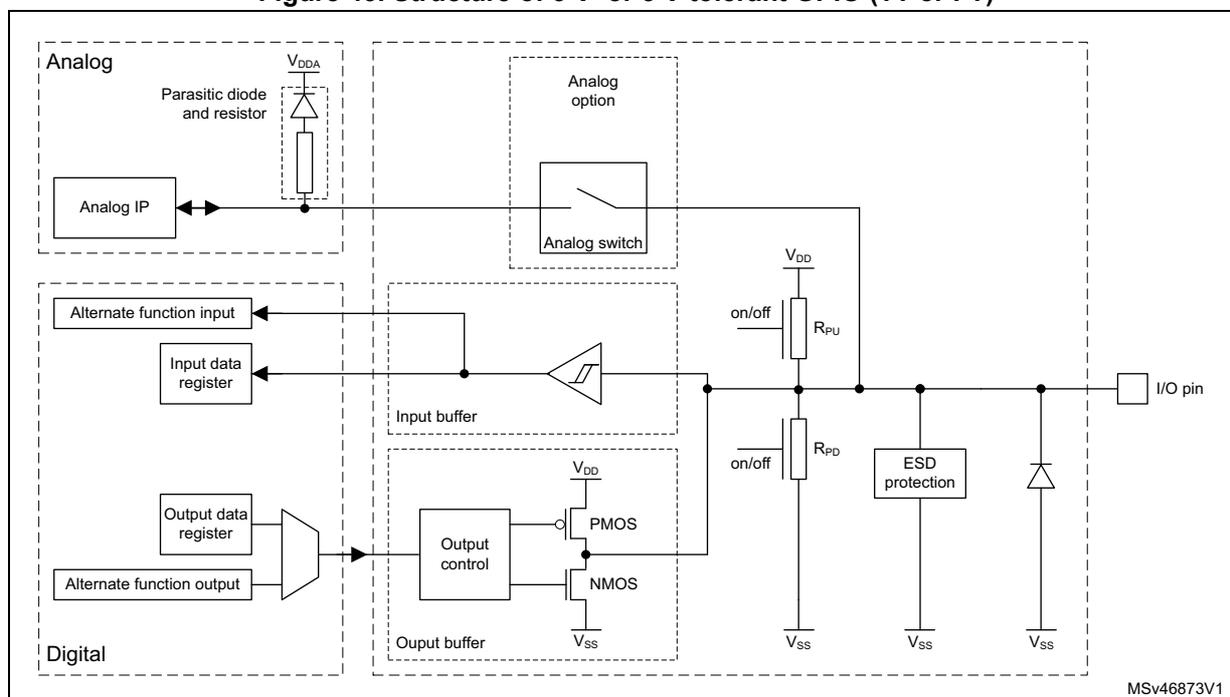
The diagram shows the internal structure of a 3 V- or 5 V-tolerant GPIO pin. It is divided into two main functional blocks: Analog and Digital .
- Analog Block: Contains an Analog IP connected to a Parasitic diode and resistor (connected to \( V_{DDA} \) ). An Analog option switch can connect the internal analog circuitry to the I/O pin via an Analog switch .
- Digital Block:
- Input Path: Includes Alternate function input , an Input data register , and an Input buffer with a Schmitt trigger.
- Output Path: Includes an Output data register , Alternate function output , an Output control block, and an Ouput buffer (containing PMOS and NMOS transistors connected to \( V_{DD} \) and \( V_{SS} \) ).
- External Connections: The I/O pin is connected to \( V_{DD} \) through a pull-up resistor ( \( R_{PU} \) ) and to \( V_{SS} \) through a pull-down resistor ( \( R_{PD} \) ). Both resistors have an on/off control. The pin also features an ESD protection circuit and a clamping diode to \( V_{SS} \) .
The diagram is labeled MSV46873V1 in the bottom right corner.
| MODE(i) [1:0] | OTYPE(i) | OSPEED(i) [1:0] | PUPD(i) [1:0] | I/O configuration | |||
|---|---|---|---|---|---|---|---|
| 01 | 0 | SPEED [1:0] | 0 | 0 | GP output | PP | |
| 0 | 0 | 1 | GP output | PP + PU | |||
| 0 | 1 | 0 | GP output | PP + PD | |||
| 0 | 1 | 1 | Reserved | ||||
| 1 | 0 | 0 | GP output | OD | |||
| 1 | 0 | 1 | GP output | OD + PU | |||
| 1 | 1 | 0 | GP output | OD + PD | |||
| 1 | 1 | 1 | Reserved (GP output OD) | ||||
| 10 | 0 | SPEED [1:0] | 0 | 0 | AF | PP | |
| 0 | 0 | 1 | AF | PP + PU | |||
| 0 | 1 | 0 | AF | PP + PD | |||
| 0 | 1 | 1 | Reserved | ||||
| 1 | 0 | 0 | AF | OD | |||
| 1 | 0 | 1 | AF | OD + PU | |||
| 1 | 1 | 0 | AF | OD + PD | |||
| 1 | 1 | 1 | Reserved | ||||
| 00 | x | x | x | 0 | 0 | Input | Floating |
| x | x | x | 0 | 1 | Input | PU | |
| x | x | x | 1 | 0 | Input | PD | |
| x | x | x | 1 | 1 | Reserved (input floating) | ||
| 11 | x | x | x | 0 | 0 | Input/output | Analog |
| x | x | x | 0 | 1 | Reserved | ||
| x | x | x | 1 | 0 | Input/output | Analog PD | |
| x | x | x | 1 | 1 | Reserved | ||
1. GP = general-purpose, PP = push-pull, PU = pull-up, PD = pull-down, OD = open-drain, AF = alternate function.
14.4.1 GPIO general-purpose I/O
During and just after reset, the alternate functions are not active and most of the I/O ports are configured in analog mode.
The debug pins are in AF pull-up / pull-down after reset:
- • PA15: JTDI in pull-up
- • PA14: JTCK/SWCLK in pull-down
- • PA13: JTMS/SWDIO in pull-up
- • PB4: NJTRST in pull-up
- • PB3: JTDO/TRACEWO in floating state no pull-up / pull-down
PH3/BOOT0 is in input mode during the reset until at least the end of the option byte loading phase (see Section 14.4.16 ).
When the pin is configured as output, the value written to the output data register (GPIOx_ODR) is output on the I/O pin. It is possible to use the output driver in push-pull mode or open-drain mode (only the low level is driven, high level is Hi-Z).
The input data register (GPIOx_IDR) captures the data present on the I/O pin at every AHB clock cycle.
All GPIO pins have weak internal pull-up and pull-down resistors that can be activated or not depending on the value in the GPIOx_PUPDR register.
14.4.2 GPIO pin alternate function multiplexer and mapping
The device I/O pins are connected to on-board peripherals/modules through a multiplexer that allows only one peripheral alternate function (AF) connected to an I/O pin at a time. In this way, there is no conflict between peripherals available on the same I/O pin.
Each I/O pin has a multiplexer with up to 16 alternate function inputs (AF0 to AF15) that can be configured through the GPIOx_AFRL (for pin 0 to 7) and GPIOx_AFRH (for pin 8 to 15) registers:
- • After reset, the multiplexer selection is alternate function 0 (AF0). The I/Os are configured in alternate function mode through GPIOx_MODER register.
- • The specific alternate function assignments for each pin are detailed in the device datasheet.
In addition to this flexible I/O multiplexing architecture, each peripheral has alternate functions mapped onto different I/O pins to optimize the number of peripherals available in smaller packages.
For secure peripherals the GPIO pin must be secure to use the secure peripheral alternate function.
To use an I/O in a given configuration, the user must proceed as follows:
- • Debug function: after each device reset these pins are assigned as alternate function pins immediately usable by the debugger host.
- • GPIO: configure the desired I/O as output, input, or analog in the GPIOx_MODER register.
- •
Peripheral alternate function:
- – Connect the I/O to the desired alternate function in one of the GPIOx_AFRH or GPIOx_AFRH register.
- – Select the type, pull-up/down, and output speed via the GPIOx_OTYPER, GPIOx_PUPDR and GPIOx_OSPEEDER registers respectively.
- – Configure the desired I/O as an alternate function in the GPIOx_MODER register.
- •
Additional functions:
- – For the ADC, COMP and PVD_IN, configure the desired I/O in analog mode in the GPIOx_MODER register and configure the required function in the ADC, COMP, and PVD registers.
Refer to the “Alternate function mapping” table in the device datasheet for the detailed mapping of the alternate function I/O pins.
14.4.3 GPIO port additional function multiplexer
For the additional functions like RTC, TAMPx, WKUPx and LSE oscillator, configure the required I/O function in the related RTC, TAMP, PWR, and RCC registers. These functions have priority over the configuration in the standard GPIO registers.
14.4.4 GPIO port control registers
Each of the GPIO ports has four 32-bit memory-mapped control registers (GPIOx_MODER, GPIOx_OTYPER, GPIOx_OSPEEDER, GPIOx_PUPDR) to configure up to 16 I/Os. The GPIOx_MODER register is used to select the I/O mode (input, output, AF, analog). The GPIOx_OTYPER and GPIOx_OSPEEDER registers are used to select the output type (push-pull or open-drain) and speed. The GPIOx_PUPDR register is used to select the pull-up/pull-down whatever the I/O direction.
14.4.5 GPIO port data registers
Each GPIO has two 16-bit memory-mapped data registers: input and output data registers ( GPIO port A input data register (GPIOA_IDR) and GPIO port A output data register (GPIOA_ODR) ).
GPIOx_ODR stores the data to be output, it is read/write accessible. The data input through the I/Os are stored into the input data register (GPIOx_IDR), a read-only register.
When changing MODER to select input or ODR level, up to three HCLK cycles are needed to reflect the GPIO level in the IDR register.
14.4.6 GPIO data bitwise handling
The bit set reset register (GPIOx_BSRR) is a 32-bit register that allows the application to set and reset each individual bit in the output data register (GPIOx_ODR). This register has twice the size of GPIOx_ODR.
Two control bits in GPIOx_BSRR, namely BS(i) and BR(i) correspond to each bit in GPIOx_ODR. When written to 1, BS(i) sets the corresponding ODR(i) bit. When written to 1, BR(i) resets the ODR(i) corresponding bit.
Writing any bit to 0 in GPIOx_BSRR does not have any effect on the corresponding bit in GPIOx_ODR. If there is an attempt to set and reset a bit in GPIOx_BSRR, the set action takes priority.
Using the GPIOx_BSRR register to change the values of individual bits in GPIOx_ODR is a “one-shot” effect that does not lock the GPIOx_ODR bits. The GPIOx_ODR bits can always be accessed directly. The GPIOx_BSRR register provides a way of performing atomic bitwise handling.
There is no need for the software to disable interrupts when programming the GPIOx_ODR at bit level: one or more bits can be modified in a single atomic AHB write access.
Individual bits in GPIOx_ODR can also be reset in a single atomic AHB write to GPIOx_BRR.
14.4.7 GPIO locking mechanism
The GPIO control registers can be frozen by applying a specific write sequence to the GPIOx_LCKR register. The frozen registers are GPIOx_MODER, GPIOx_OTYPER, GPIOx_OSPEEDR, GPIOx_PUPDR, GPIOx_AFR, GPIOx_AFRH.
To write the GPIOx_LCKR register, a specific write/read sequence must be applied. When the right LOCK sequence is applied to bit 16, the value of LCKR[15:0] is used to lock the configuration of the I/Os (during the write sequence the LCKR[15:0] value must be the same). When the LOCK sequence is applied to a port bit, the value of the port bit can no longer be modified until the next MCU reset or peripheral reset. Each GPIOx_LCKR bit freezes the corresponding bit in the control registers (GPIOx_MODER, GPIOx_OTYPER, GPIOx_OSPEEDR, GPIOx_PUPDR, GPIOx_AFR and GPIOx_AFRH).
The LOCK sequence can only be performed using a word (32-bit long) access to the GPIOx_LCKR register because GPIOx_LCKR bit 16 must be set at the same time as the [15:0] bits.
14.4.8 GPIO alternate function input/output
Two registers are provided to select one of the alternate function inputs/outputs available for each I/O. With these registers, the user can connect an alternate function to some other pin as required by the application.
This means that a number of possible peripheral functions is multiplexed on each GPIO using the GPIOx_AFR and GPIOx_AFRH alternate function registers. The application can thus select any one of the possible functions for each I/O. The AF selection signal being common to the alternate function input and alternate function output, a single channel is selected for the alternate function input/output of a given I/O.
To know which functions are multiplexed on each GPIO pin, refer to the device datasheet.
14.4.9 GPIO external interrupt/wakeup lines
All ports have external interrupt capability. To use external interrupt lines, the port can be configured in input, output, or alternate function mode (the port must not be configured in analog mode). Refer to Section 19: Extended interrupts and event controller (EXTI) .
14.4.10 GPIO input configuration
When the I/O port is programmed as input:
- • The output buffer is disabled.
- • The Schmitt trigger input is activated.
- • The pull-up and pull-down resistors are activated depending on the value in the GPIOx_PUPDR register.
- • The data present on the I/O pin are sampled into the input data register every AHB clock cycle.
- • A read access to the input data register provides the I/O state.
Figure 44 shows the input configuration of the I/O port bit.
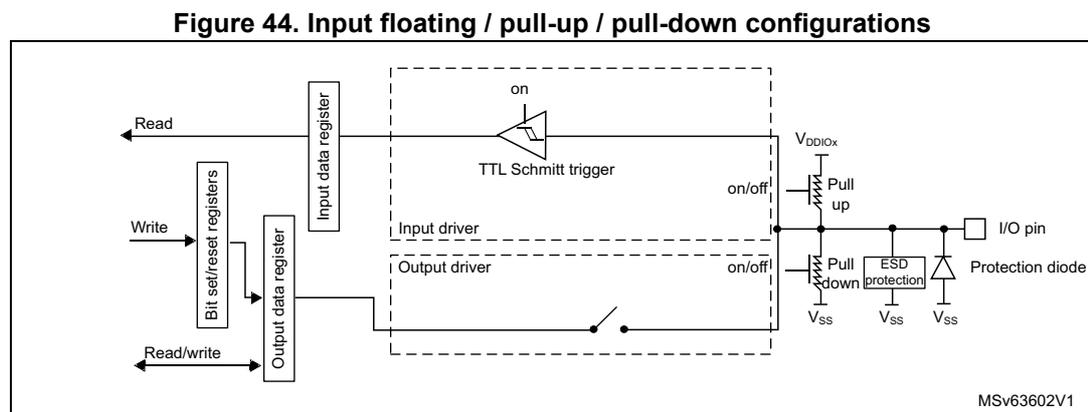
Figure 44. Input floating / pull-up / pull-down configurations
14.4.11 GPIO output configuration
When the I/O port is programmed as output:
- • The output buffer is enabled:
- – Open-drain mode: a 0 in the output register activates the N-MOS whereas a 1 in the output register leaves the port in Hi-Z (the P-MOS is never activated).
- – Push-pull mode: a 0 in the output register activates the N-MOS whereas a 1 in the output register activates the P-MOS.
- • The Schmitt trigger input is activated.
- • The pull-up and pull-down resistors are activated depending on the value in the GPIOx_PUPDR register.
- • The data present on the I/O pin are sampled into the input data register every AHB clock cycle.
- • A read access to the input data register gets the I/O state.
- • A read access to the output data register gets the last written value.
Figure 45 shows the output configuration of the I/O port bit.
Figure 45. Output configuration
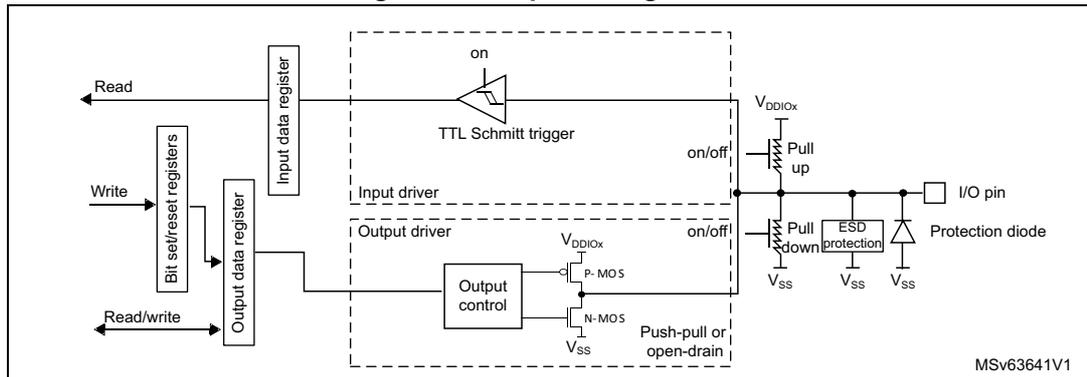
The diagram illustrates the internal architecture of a GPIO pin configured for output. On the left, external signals 'Read', 'Write', and 'Read/write' are shown interacting with 'Bit set/reset registers' and 'Output data register' blocks. These registers are connected to an 'Input data register' and an 'Output control' block. The 'Output control' block drives a pair of transistors, a P-MOS and an N-MOS, which form an 'Output driver'. Above the output driver is a 'TTL Schmitt trigger' with an 'on' input. To the right of the transistors are 'Pull up' and 'Pull down' resistors, both with 'on/off' controls, connected to \( V_{DDIOx} \) and \( V_{SS} \) respectively. Further right are 'ESD protection' and 'Protection diode' components, also connected to \( V_{SS} \) . The entire internal circuitry is connected to an external 'I/O pin'. The text 'Push-pull or open-drain' is present near the output driver. A reference code 'MSV63641V1' is located in the bottom right corner.
14.4.12 GPIO alternate function configuration
When the I/O port is programmed as alternate function:
- • The output buffer can be configured in open-drain or push-pull mode.
- • The output buffer is driven by the signals coming from the peripheral (transmitter enable and data).
- • The Schmitt trigger input is activated.
- • The weak pull-up and pull-down resistors are activated or not depending on the value in the GPIOx_PUPDR register.
- • The data present on the I/O pin are sampled into the input data register every AHB clock cycle.
- • A read access to the input data register gets the I/O state.
Figure 46 shows the alternate function configuration of the I/O port bit.
Figure 46. Alternate function configuration
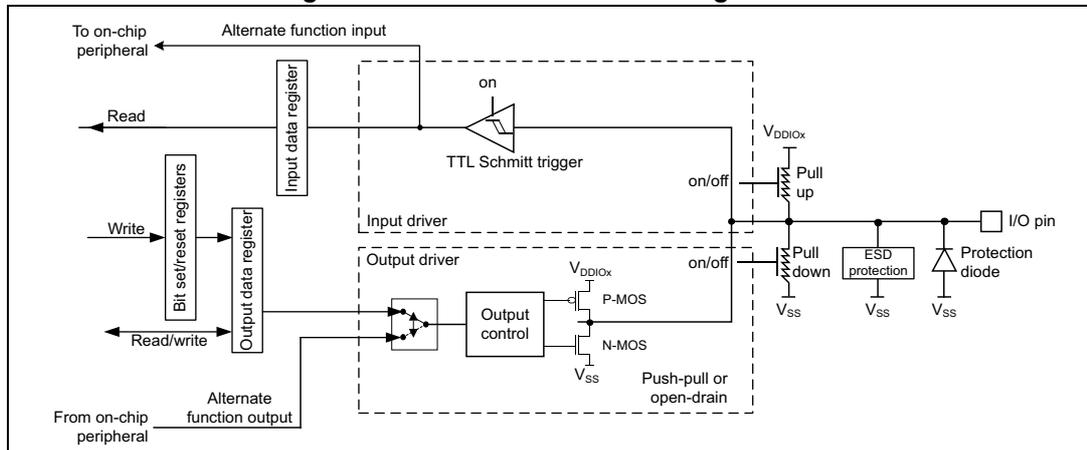
This diagram shows the internal circuitry of a GPIO pin in alternate function mode. The 'Alternate function input' from an on-chip peripheral is connected to the 'Input data register'. The 'Alternate function output' from an on-chip peripheral is connected to the 'Output control' block of the output driver. The 'Output control' block drives the P-MOS and N-MOS transistors. The 'TTL Schmitt trigger', 'Pull up', 'Pull down', 'ESD protection', and 'Protection diode' components are also present and connected to the 'I/O pin' and power rails \( V_{DDIOx} \) and \( V_{SS} \) . The 'Bit set/reset registers' and 'Output data register' are shown but their external connections are not active in this mode.
14.4.13 GPIO analog configuration
When the I/O port is programmed in analog configuration:
- • The output buffer is disabled.
- • The Schmitt trigger input is deactivated, providing zero consumption for every analog value of the I/O pin. The output of the Schmitt trigger is forced to a constant value (0).
- • The weak pull-down resistor is activated depending on the value in the GPIOx_PUPDR register. The weak pull-up resistor is disabled by hardware.
- • Read access to the input data register gets the value 0.
Figure 47 shows the high-impedance, analog-input configuration of the I/O port bits.
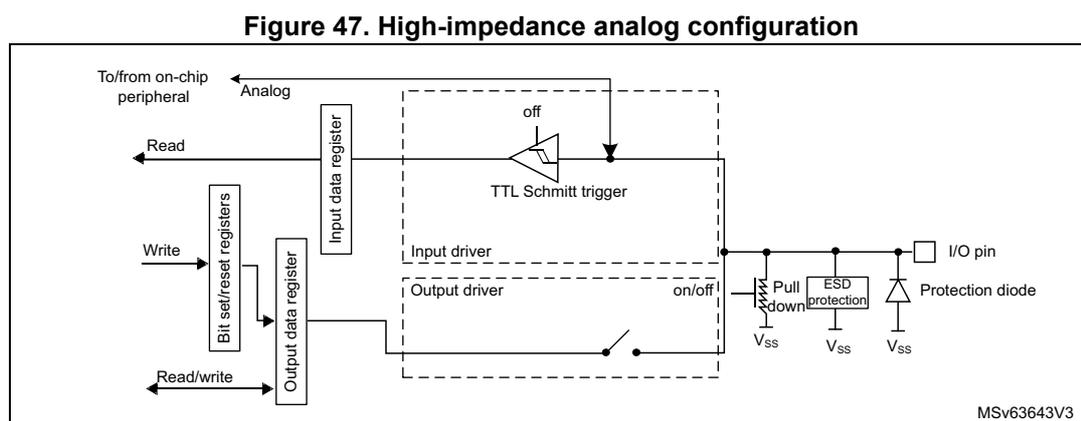
Figure 47. High-impedance analog configuration
14.4.14 GPIO using the LSE oscillator pins as GPIOs
When the LSE oscillator is switched off (default state after reset), the related oscillator pins can be used as normal GPIOs.
When the LSE oscillator is switched on (by setting the LSEON bit in the RCC_BDCR1 register), the oscillator takes control of its associated pins and the GPIO configuration of these pins has no effect.
When the oscillator is configured in a user external clock mode, only the pin is reserved for clock input, and the OSC32_OUT pin can still be used as normal GPIO.
14.4.15 GPIO using GPIO pins with RTC
The PC13/PC14/PC15 GPIO functionality is lost when the Core domain is powered off (when the device enters Standby modes). In this case, if their GPIO configuration is not bypassed by the RTC configuration, these pins are set in an analog input mode.
For details about I/O control by the RTC, refer to Section 36.3: RTC functional description
14.4.16 GPIO using PH3 as GPIO
PH3 may be used as boot pin (BOOT0) or as a GPIO. Depending on the nSWBOOT0 user option bit in the FLASH_OPTR, PH3 switches from the input mode to the analog input mode:
- • After the option byte loading phase if nSWBOOT0 = 1
- • After reset if nSWBOOT0 = 0
14.4.17 GPIO TrustZone security
The TrustZone security is activated by the TZEN user option bit in the FLASH_OPTR. When the TrustZone is active (TZEN = 1), each I/O pin of GPIO port can be individually configured as secure through the GPIOx_SECCFGR register.
When the selected I/O pin is configured as secure, its corresponding configuration bits for alternate function, mode selection, I/O data are secure against a non-secure access. In case of non-secure access, these bits are RAZ/WI.
The I/Os with peripherals functions are also conditioned by the peripheral security configuration (see Section 5: Global TrustZone® controller (GTZC) for more details):
- • For peripherals for which the I/O pin selection is done through alternate functions registers: if the peripheral is configured as secure, it cannot be connected to a non-secure I/O pin. If this is not respected, the input data to the secure peripheral is forced to 0 (I/O input pin value is ignored) and the output pin value is forced to 0, thus avoiding any secure information leak through non-secure I/Os.
- • For I/Os with analog switches, directly controlled by peripherals (such as ADC): if the I/O is secure, the I/O analog switch cannot be controlled by a non-secure peripheral. If this is not respected, the switch remains open. This prevents the redirection of secure data to a non-secure peripheral or I/O through analog path. Refer to Section 3: System security for more details.
- • Some of the paths between I/Os “additional functions” and peripherals are not blocked if the I/O is secure and the peripheral is non-secure. Therefore it is recommended to configure those peripherals as secure even when not used by the application. Refer to Section 3: System security for the list of concerned peripherals. When the path has a security control, it follows the same rule as I/O selection through alternate functions.
Refer to the device pins definition table in datasheet for more information about peripherals alternate functions and additional functions mapping.
After reset, all GPIO ports are secure.
Table 114 gives a summary of the I/O port secured bits following the security configuration bit in the GPIO_SECCFGR register. When the I/O bit port is configured as secure:
- • Secured bits: read and write operations are only allowed by a secure access. Non secure-read or write accesses on secured bits are RAZ/WI. There is no illegal access event generated.
- • Non-secure bits: no restriction. Read and write operations are allowed by both secure and non-secure accesses.
When the TrustZone security is disabled (TZEN = 0), all registers bits are non-secure. The GPIOx_SECCFGR register is RAZ/WI.
Table 114. GPIO secured bits
| Secure configuration bit | Secured bit | Register name | Non-secure access on secure bits |
|---|---|---|---|
| SECy = 1 in GPIOx_SECCFGR (1) | MODEy[1:0] | GPIOx_MODER | RAZ/WI |
| OTy | GPIOx_OTYPER | ||
| OSPEEDy[1:0] | GPIOx_OSPEEDR | ||
| PUPDy[1:0] | GPIOx_PUPDR | ||
| IDy | GPIOx_IDR | ||
| ODy | GPIOx_ODR | ||
| BSy and BRy | GPIOx_BSRR | ||
| LCKy | GPIOx_LCKR | ||
| BRy | GPIOx_BRR | ||
| AFSELy[3:0] | GPIOx_AFRH GPIOx_AFRL |
1. x = port index, y = port pin index, for values see Table 112: GPIO implementation .
As soon as at least one function is configured to be secure, the GPIO reset and clock control bits in the RCC are also secured.
14.4.18 GPIO privileged and unprivileged modes
All GPIO registers can be read and written by privileged and unprivileged accesses, whatever the security state (secure or non-secure).
14.4.19 GPIO compensation cell
The I/O commutation slew rate ( \( t_{fall}/t_{rise} \) ) can be adapted by software depending on process, voltage and temperatures conditions, in order to reduce the I/O noise on power supply. Refer to Section 15: System configuration controller (SYSCFG) for more details.
14.4.20 GPIO standby retention
The I/O state can be retained in Standby mode. This is configured in the PWR.
14.5 GPIO port A registers
This section gives a detailed description of the GPIO port A registers.
The peripheral registers can be written in word, half word or byte mode.
14.5.1 GPIO port A mode register (GPIOA_MODER)
Address offset: 0x000
Reset value: 0xABFF FFFF
| 31 | 30 | 29 | 28 | 27 | 26 | 25 | 24 | 23 | 22 | 21 | 20 | 19 | 18 | 17 | 16 |
|---|---|---|---|---|---|---|---|---|---|---|---|---|---|---|---|
| MODE15[1:0] | MODE14[1:0] | MODE13[1:0] | MODE12[1:0] | MODE11[1:0] | MODE10[1:0] | MODE9[1:0] | MODE8[1:0] | ||||||||
| rw | rw | rw | rw | rw | rw | rw | rw | rw | rw | rw | rw | rw | rw | rw | rw |
| 15 | 14 | 13 | 12 | 11 | 10 | 9 | 8 | 7 | 6 | 5 | 4 | 3 | 2 | 1 | 0 |
|---|---|---|---|---|---|---|---|---|---|---|---|---|---|---|---|
| MODE7[1:0] | MODE6[1:0] | MODE5[1:0] | MODE4[1:0] | MODE3[1:0] | MODE2[1:0] | MODE1[1:0] | MODE0[1:0] | ||||||||
| rw | rw | rw | rw | rw | rw | rw | rw | rw | rw | rw | rw | rw | rw | rw | rw |
Bits 31:30 MODE15[1:0] : Port configuration I/O pin 15
These bits are written by software to configure the I/O mode.
Access can be protected by GPIOA_SEC15.
00: Input mode
01: General purpose output mode
10: Alternate function mode
11: Analog mode (reset state)
Bits 29:28 MODE14[1:0] : Port configuration I/O pin 14
Bits 27:26 MODE13[1:0] : Port configuration I/O pin 13
Bits 25:24 MODE12[1:0] : Port configuration I/O pin 12
Bits 23:22 MODE11[1:0] : Port configuration I/O pin 11
Bits 21:20 MODE10[1:0] : Port configuration I/O pin 10
Bits 19:18 MODE9[1:0] : Port configuration I/O pin 9
Bits 17:16 MODE8[1:0] : Port configuration I/O pin 8
Bits 15:14 MODE7[1:0] : Port configuration I/O pin 7
Bits 13:12 MODE6[1:0] : Port configuration I/O pin 6
Bits 11:10 MODE5[1:0] : Port configuration I/O pin 5
Bits 9:8 MODE4[1:0] : Port configuration I/O pin 4
Note that bits 9:8 are reserved on STM32WBA54xx and STM32WBA52xx devices.
Bits 7:6 MODE3[1:0] : Port configuration I/O pin 3
Bits 5:4 MODE2[1:0] : Port configuration I/O pin 2
Bits 3:2 MODE1[1:0] : Port configuration I/O pin 1
Bits 1:0 MODE0[1:0] : Port configuration I/O pin 0
14.5.2 GPIO port A output type register (GPIOA_OTYPER)
Address offset: 0x004
Reset value: 0x0000 0000
| 31 | 30 | 29 | 28 | 27 | 26 | 25 | 24 | 23 | 22 | 21 | 20 | 19 | 18 | 17 | 16 |
|---|---|---|---|---|---|---|---|---|---|---|---|---|---|---|---|
| Res. | Res. | Res. | Res. | Res. | Res. | Res. | Res. | Res. | Res. | Res. | Res. | Res. | Res. | Res. | Res. |
| 15 | 14 | 13 | 12 | 11 | 10 | 9 | 8 | 7 | 6 | 5 | 4 | 3 | 2 | 1 | 0 |
| OT15 | OT14 | OT13 | OT12 | OT11 | OT10 | OT9 | OT8 | OT7 | OT6 | OT5 | OT4 | OT3 | OT2 | OT1 | OT0 |
| rw | rw | rw | rw | rw | rw | rw | rw | rw | rw | rw | rw | rw | rw | rw | rw |
Bits 31:16 Reserved, must be kept at reset value.
Bits 15:0 OT[15:0] : Port configuration I/O pin y (y = 15 to 0)
These bits are written by software to configure the I/O output type.
Access can be protected by GPIOA SECy.
0: Output push-pull (reset state)
1: Output open-drain
Note that bit 4 is reserved on STM32WBA54xx and STM32WBA52xx devices.
14.5.3 GPIO port A output speed register (GPIOA_OSPEEDR)
Address offset: 0x008
Reset value: 0x0800 0000
| 31 | 30 | 29 | 28 | 27 | 26 | 25 | 24 | 23 | 22 | 21 | 20 | 19 | 18 | 17 | 16 |
|---|---|---|---|---|---|---|---|---|---|---|---|---|---|---|---|
| OSPEED15[1:0] | OSPEED14[1:0] | OSPEED13[1:0] | OSPEED12[1:0] | OSPEED11[1:0] | OSPEED10[1:0] | OSPEED9[1:0] | OSPEED8[1:0] | ||||||||
| 15 | 14 | 13 | 12 | 11 | 10 | 9 | 8 | 7 | 6 | 5 | 4 | 3 | 2 | 1 | 0 |
| OSPEED7[1:0] | OSPEED6[1:0] | OSPEED5[1:0] | OSPEED4[1:0] | OSPEED3[1:0] | OSPEED2[1:0] | OSPEED1[1:0] | OSPEED0[1:0] | ||||||||
| rw | rw | rw | rw | rw | rw | rw | rw | rw | rw | rw | rw | rw | rw | rw | rw |
Bits 31:30 OSPEED15[1:0] : Port configuration I/O pin 15
These bits are written by software to configure the I/O output speed.
Access can be protected by GPIOA SEC15.
00: Low speed
01: Medium speed
10: High speed
11: Reserved
Note: Refer to the device datasheet for the frequency specifications and the power supply and load conditions for each speed.
Bits 29:28 OSPEED14[1:0] : Port configuration I/O pin 14
Bits 27:26 OSPEED13[1:0] : Port configuration I/O pin 13
Bits 25:24 OSPEED12[1:0] : Port configuration I/O pin 12
Bits 23:22 OSPEED11[1:0] : Port configuration I/O pin 11
Bits 21:20 OSPEED10[1:0] : Port configuration I/O pin 10
Bits 19:18 OSPEED9[1:0] : Port configuration I/O pin 9
Bits 17:16 OSPEED8[1:0] : Port configuration I/O pin 8
Bits 15:14 OSPEED7[1:0] : Port configuration I/O pin 7
Bits 13:12 OSPEED6[1:0] : Port configuration I/O pin 6
Bits 11:10 OSPEED5[1:0] : Port configuration I/O pin 5
Bits 9:8 OSPEED4[1:0] : Port configuration I/O pin 4
Note that bit 9:8 are reserved on STM32WBA54xx and STM32WBA52xx devices.
Bits 7:6 OSPEED3[1:0] : Port configuration I/O pin 3
Bits 5:4 OSPEED2[1:0] : Port configuration I/O pin 2
Bits 3:2 OSPEED1[1:0] : Port configuration I/O pin 1
Bits 1:0 OSPEED0[1:0] : Port configuration I/O pin 0
14.5.4 GPIO port A pull-up/pull-down register (GPIOA_PUPDR)
Address offset: 0x00C
Reset value: 0x6400 0000
| 31 | 30 | 29 | 28 | 27 | 26 | 25 | 24 | 23 | 22 | 21 | 20 | 19 | 18 | 17 | 16 |
|---|---|---|---|---|---|---|---|---|---|---|---|---|---|---|---|
| PUPD15[1:0] | PUPD14[1:0] | PUPD13[1:0] | PUPD12[1:0] | PUPD11[1:0] | PUPD10[1:0] | PUPD9[1:0] | PUPD8[1:0] | ||||||||
| rw | rw | rw | rw | rw | rw | rw | rw | rw | rw | rw | rw | rw | rw | rw | rw |
| 15 | 14 | 13 | 12 | 11 | 10 | 9 | 8 | 7 | 6 | 5 | 4 | 3 | 2 | 1 | 0 |
| PUPD7[1:0] | PUPD6[1:0] | PUPD5[1:0] | PUPD4[1:0] | PUPD3[1:0] | PUPD2[1:0] | PUPD1[1:0] | PUPD0[1:0] | ||||||||
| rw | rw | rw | rw | rw | rw | rw | rw | rw | rw | rw | rw | rw | rw | rw | rw |
Bits 31:30 PUPD15[1:0] : Port configuration I/O pin 15
These bits are written by software to configure the I/O pull-up or pull-down
Access can be protected by GPIOA SEC15.
00: No pull-up, pull-down
01: Pull-up
10: Pull-down
11: Reserved
Bits 29:28 PUPD14[1:0] : Port configuration I/O pin 14
Bits 27:26 PUPD13[1:0] : Port configuration I/O pin 13
Bits 25:24 PUPD12[1:0] : Port configuration I/O pin 12
Bits 23:22 PUPD11[1:0] : Port configuration I/O pin 11
Bits 21:20 PUPD10[1:0] : Port configuration I/O pin 10
Bits 19:18 PUPD9[1:0] : Port configuration I/O pin 9
Bits 17:16 PUPD8[1:0] : Port configuration I/O pin 8
Bits 15:14 PUPD7[1:0] : Port configuration I/O pin 7
Bits 13:12 PUPD6[1:0] : Port configuration I/O pin 6
Bits 11:10 PUPD5[1:0] : Port configuration I/O pin 5
Bits 9:8 PUPD4[1:0] : Port configuration I/O pin 4
Note that bit 9:8 are reserved on STM32WBA54xx and STM32WBA52xx devices.
Bits 7:6 PUPD3[1:0] : Port configuration I/O pin 3
Bits 5:4 PUPD2[1:0] : Port configuration I/O pin 2
Bits 3:2 PUPD1[1:0] : Port configuration I/O pin 1
Bits 1:0 PUPD0[1:0] : Port configuration I/O pin 0
14.5.5 GPIO port A input data register (GPIOA_IDR)
Address offset: 0x010
Reset value: 0x0000 XXXX
| 31 | 30 | 29 | 28 | 27 | 26 | 25 | 24 | 23 | 22 | 21 | 20 | 19 | 18 | 17 | 16 |
|---|---|---|---|---|---|---|---|---|---|---|---|---|---|---|---|
| Res. | Res. | Res. | Res. | Res. | Res. | Res. | Res. | Res. | Res. | Res. | Res. | Res. | Res. | Res. | Res. |
| 15 | 14 | 13 | 12 | 11 | 10 | 9 | 8 | 7 | 6 | 5 | 4 | 3 | 2 | 1 | 0 |
| ID15 | ID14 | ID13 | ID12 | ID11 | ID10 | ID9 | ID8 | ID7 | ID6 | ID5 | ID4 | ID3 | ID2 | ID1 | ID0 |
| r | r | r | r | r | r | r | r | r | r | r | r | r | r | r | r |
Bits 31:16 Reserved, must be kept at reset value.
Bits 15:0 ID[15:0] : Port input data I/O pin y (y = 15 to 0)
These bits are read-only. They contain the input value of the corresponding I/O port.
Access can be protected by GPIOA SECy.
Note that bit 4 is reserved on STM32WBA54xx and STM32WBA52xx devices.
14.5.6 GPIO port A output data register (GPIOA_ODR)
Address offset: 0x014
Reset value: 0x0000 0000
| 31 | 30 | 29 | 28 | 27 | 26 | 25 | 24 | 23 | 22 | 21 | 20 | 19 | 18 | 17 | 16 |
|---|---|---|---|---|---|---|---|---|---|---|---|---|---|---|---|
| Res. | Res. | Res. | Res. | Res. | Res. | Res. | Res. | Res. | Res. | Res. | Res. | Res. | Res. | Res. | Res. |
| 15 | 14 | 13 | 12 | 11 | 10 | 9 | 8 | 7 | 6 | 5 | 4 | 3 | 2 | 1 | 0 |
| OD15 | OD14 | OD13 | OD12 | OD11 | OD10 | OD9 | OD8 | OD7 | OD6 | OD5 | OD4 | OD3 | OD2 | OD1 | OD0 |
| rw | rw | rw | rw | rw | rw | rw | rw | rw | rw | rw | rw | rw | rw | rw | rw |
Bits 31:16 Reserved, must be kept at reset value.
Bits 15:0 OD[15:0] : Port output data I/O pin y (y = 15 to 0)
These bits can be read and written by software.
Access can be protected by GPIOA SECy.
Note that bit 4 is reserved on STM32WBA54xx and STM32WBA52xx devices.
Note: For atomic bit set/reset, the OD bits can be individually set and/or reset by writing to the GPIOA_BSRR or GPIOA_BRR registers.
14.5.7 GPIO port A bit set/reset register (GPIOA_BSRR)
Address offset: 0x018
Reset value: 0x0000 0000
| 31 | 30 | 29 | 28 | 27 | 26 | 25 | 24 | 23 | 22 | 21 | 20 | 19 | 18 | 17 | 16 |
| BR15 | BR14 | BR13 | BR12 | BR11 | BR10 | BR9 | BR8 | BR7 | BR6 | BR5 | BR4 | BR3 | BR2 | BR1 | BR0 |
| w | w | w | w | w | w | w | w | w | w | w | w | w | w | w | w |
| 15 | 14 | 13 | 12 | 11 | 10 | 9 | 8 | 7 | 6 | 5 | 4 | 3 | 2 | 1 | 0 |
| BS15 | BS14 | BS13 | BS12 | BS11 | BS10 | BS9 | BS8 | BS7 | BS6 | BS5 | BS4 | BS3 | BS2 | BS1 | BS0 |
| w | w | w | w | w | w | w | w | w | w | w | w | w | w | w | w |
Bits 31:16 BR[15:0] : Port reset I/O pin y (y = 15 to 0)
- These bits are write-only. A read to these bits returns the value 0.
- Access can be protected by GPIOA SECy.
- 0: No action on the corresponding ODy bit
- 1: Resets the corresponding ODy bit
- Note that bit 20 is reserved on STM32WBA54xx and STM32WBA52xx devices.
Note: If both BSy and BRy are set, BSy has priority.
Bits 15:0 BS[15:0] : Port set I/O pin y (y = 15 to 0)
- These bits are write-only. A read to these bits returns the value 0.
- Access can be protected by GPIOA SECy.
- 0: No action on the corresponding ODy bit
- 1: Sets the corresponding ODy bit
- Note that bit 4 is reserved on STM32WBA54xx and STM32WBA52xx devices.
14.5.8 GPIO port A configuration lock register (GPIOA_LCKR)
Address offset: 0x01C
Reset value: 0x0000 0000
This register is used to lock the configuration of the port bits when a correct write sequence is applied to bit 16 (LCKK). The value of bits [15:0] is used to lock the configuration of the GPIO. During the write sequence, the value of LCKR[15:0] must not change. When the LOCK sequence has been applied on a port bit, the value of this port bit can no longer be modified until the next MCU reset or peripheral reset.
Note: A specific write sequence is used to write to the GPIOA_LCKR register. Only word access (32-bit long) is allowed during this locking sequence.
Each lock bit freezes a specific configuration register (control and alternate function registers).
| 31 | 30 | 29 | 28 | 27 | 26 | 25 | 24 | 23 | 22 | 21 | 20 | 19 | 18 | 17 | 16 |
| Res. | Res. | Res. | Res. | Res. | Res. | Res. | Res. | Res. | Res. | Res. | Res. | Res. | Res. | Res. | LCKK |
| rw | |||||||||||||||
| 15 | 14 | 13 | 12 | 11 | 10 | 9 | 8 | 7 | 6 | 5 | 4 | 3 | 2 | 1 | 0 |
| LCK15 | LCK14 | LCK13 | LCK12 | LCK11 | LCK10 | LCK9 | LCK8 | LCK7 | LCK6 | LCK5 | LCK4 | LCK3 | LCK2 | LCK1 | LCK0 |
| rw | rw | rw | rw | rw | rw | rw | rw | rw | rw | rw | rw | rw | rw | rw | rw |
Bits 31:17 Reserved, must be kept at reset value.
Bit 16 LCKK : Lock key
This bit can be read any time. It can only be modified using the lock key write sequence.
Access can be protected by any GPIOA SECy.
0: Port configuration lock key not active
1: Port configuration lock key active. The GPIOx_LCKR register is locked until the next MCU reset or peripheral reset.
- LOCK key write sequence:
WR LCKR[16] = 1 + LCKR[15:0]
WR LCKR[16] = 0 + LCKR[15:0]
WR LCKR[16] = 1 + LCKR[15:0]
- LOCK key read
RD LCKR[16] = 1 (this read operation is optional but it confirms that the lock is active)
Note: During the LOCK key write sequence, the value of LCKR[15:0] must not change.
Any error in the lock sequence aborts the LOCK.
After the first LOCK sequence on any bit of the port, any read access on the LCKK bit returns 1 until the next MCU reset or peripheral reset.
Bits 15:0 LCK[15:0] : Port lock I/O pin y (y = 15 to 0)
These bits are read/write but can only be written when the LCKK bit is 0
Access can be protected by GPIOA SECy.
0: Port configuration not locked
1: Port configuration locked
Note that bit 4 is reserved on STM32WBA54xx and STM32WBA52xx devices.
14.5.9 GPIO port A alternate function low register (GPIOA_AFRL)
Address offset: 0x020
Reset value: 0x0000 0000
| 31 | 30 | 29 | 28 | 27 | 26 | 25 | 24 | 23 | 22 | 21 | 20 | 19 | 18 | 17 | 16 |
|---|---|---|---|---|---|---|---|---|---|---|---|---|---|---|---|
| AFSEL7[3:0] | AFSEL6[3:0] | AFSEL5[3:0] | AFSEL4[3:0] | ||||||||||||
| rw | rw | rw | rw | rw | rw | rw | rw | rw | rw | rw | rw | rw | rw | rw | rw |
| 15 | 14 | 13 | 12 | 11 | 10 | 9 | 8 | 7 | 6 | 5 | 4 | 3 | 2 | 1 | 0 |
| AFSEL3[3:0] | AFSEL2[3:0] | AFSEL1[3:0] | AFSEL0[3:0] | ||||||||||||
| rw | rw | rw | rw | rw | rw | rw | rw | rw | rw | rw | rw | rw | rw | rw | rw |
Bits 31:28 AFSEL7[3:0] : Alternate function selection for port I/O pin 7
These bits are written by software to configure alternate function I/Os.
Access can be protected by GPIOA SECy.
0000: AF0
0001: AF1
0010: AF2
0011: AF3
0100: AF4
0101: AF5
0110: AF6
0111: AF7
1000: AF8
1001: AF9
1010: AF10
1011: AF11
1100: AF12
1101: AF13
1110: AF14
1111: AF15
Bits 27:24 AFSEL6[3:0] : Alternate function selection for port I/O pin 6
Bits 23:20 AFSEL5[3:0] : Alternate function selection for port I/O pin 5
Bits 19:16 AFSEL4[3:0] : Alternate function selection for port I/O pin 4
Note that bit 19:16 are reserved on STM32WBA54xx and STM32WBA52xx devices.
Bits 15:12 AFSEL3[3:0] : Alternate function selection for port I/O pin 3
Bits 11:8 AFSEL2[3:0] : Alternate function selection for port I/O pin 2
Bits 7:4 AFSEL1[3:0] : Alternate function selection for port I/O pin 1
Bits 3:0 AFSEL0[3:0] : Alternate function selection for port I/O pin 0
14.5.10 GPIO port A alternate function high register (GPIOA_AFRH)
Address offset: 0x024
Reset value: 0x0000 0000
| 31 | 30 | 29 | 28 | 27 | 26 | 25 | 24 | 23 | 22 | 21 | 20 | 19 | 18 | 17 | 16 |
|---|---|---|---|---|---|---|---|---|---|---|---|---|---|---|---|
| AFSEL15[3:0] | AFSEL14[3:0] | AFSEL13[3:0] | AFSEL12[3:0] | ||||||||||||
| rw | rw | rw | rw | rw | rw | rw | rw | rw | rw | rw | rw | rw | rw | rw | rw |
| 15 | 14 | 13 | 12 | 11 | 10 | 9 | 8 | 7 | 6 | 5 | 4 | 3 | 2 | 1 | 0 |
| AFSEL11[3:0] | AFSEL10[3:0] | AFSEL9[3:0] | AFSEL8[3:0] | ||||||||||||
| rw | rw | rw | rw | rw | rw | rw | rw | rw | rw | rw | rw | rw | rw | rw | rw |
Bits 31:28 AFSEL15[3:0] : Alternate function selection for port I/O pin 15
These bits are written by software to configure alternate function I/Os.
Access can be protected by GPIOA SEC15.
0000: AF0
0001: AF1
0010: AF2
0011: AF3
0100: AF4
0101: AF5
0110: AF6
0111: AF7
1000: AF8
1001: AF9
1010: AF10
1011: AF11
1100: AF12
1101: AF13
1110: AF14
1111: AF15
Bits 27:24 AFSEL14[3:0] : Alternate function selection for port I/O pin 14
Bits 23:20 AFSEL13[3:0] : Alternate function selection for port I/O pin 13
Bits 19:16 AFSEL12[3:0] : Alternate function selection for port I/O pin 12
Bits 15:12 AFSEL11[3:0] : Alternate function selection for port I/O pin 11
Bits 11:8 AFSEL10[3:0] : Alternate function selection for port I/O pin 10
Bits 7:4 AFSEL9[3:0] : Alternate function selection for port I/O pin 9
Bits 3:0 AFSEL8[3:0] : Alternate function selection for port I/O pin 8
14.5.11 GPIO port A bit reset register (GPIOA_BRR)
Address offset: 0x028
Reset value: 0x0000 0000
| 31 | 30 | 29 | 28 | 27 | 26 | 25 | 24 | 23 | 22 | 21 | 20 | 19 | 18 | 17 | 16 |
|---|---|---|---|---|---|---|---|---|---|---|---|---|---|---|---|
| Res. | Res. | Res. | Res. | Res. | Res. | Res. | Res. | Res. | Res. | Res. | Res. | Res. | Res. | Res. | Res. |
| 15 | 14 | 13 | 12 | 11 | 10 | 9 | 8 | 7 | 6 | 5 | 4 | 3 | 2 | 1 | 0 |
| BR15 | BR14 | BR13 | BR12 | BR11 | BR10 | BR9 | BR8 | BR7 | BR6 | BR5 | BR4 | BR3 | BR2 | BR1 | BR0 |
| w | w | w | w | w | w | w | w | w | w | w | w | w | w | w | w |
Bits 31:16 Reserved, must be kept at reset value.
Bits 15:0 BR[15:0] : Port reset I/O pin y (y = 15 to 0)
These bits are write-only. A read to these bits returns the value 0.
Access can be protected by GPIOA SECy.
0: No action on the corresponding ODy bit
1: Reset the corresponding ODy bit
Note that bit 4 is reserved on STM32WBA54xx and STM32WBA52xx devices.
14.5.12 GPIO port A secure configuration register (GPIOA_SECCFGR)
Address offset: 0x030
Reset value: 0x0000 FFFF
When the system is secure (TZEN = 1), this register provides write access security and can be written only by a secure access. It is used to configure a selected I/O as secure. A non-secure write access to this register is discarded.
When the system is not secure (TZEN = 0), this register is RAZ/WI.
| 31 | 30 | 29 | 28 | 27 | 26 | 25 | 24 | 23 | 22 | 21 | 20 | 19 | 18 | 17 | 16 |
|---|---|---|---|---|---|---|---|---|---|---|---|---|---|---|---|
| Res. | Res. | Res. | Res. | Res. | Res. | Res. | Res. | Res. | Res. | Res. | Res. | Res. | Res. | Res. | Res. |
| 15 | 14 | 13 | 12 | 11 | 10 | 9 | 8 | 7 | 6 | 5 | 4 | 3 | 2 | 1 | 0 |
| SEC15 | SEC14 | SEC13 | SEC12 | SEC11 | SEC10 | SEC9 | SEC8 | SEC7 | SEC6 | SEC5 | SEC4 | SEC3 | SEC2 | SEC1 | SEC0 |
| w | w | w | w | w | w | w | w | w | w | w | w | w | w | w | w |
Bits 31:16 Reserved, must be kept at reset value.
Bits 15:0 SEC[15:0] : I/O pin of port secure bit enable y (y = 15 to 0)
These bits are written by software to enable the security I/O port pin.
0: The I/O pin is non-secure
1: The I/O pin is secure. Refer to Table 114 for all corresponding secured bits.
Note that bit 4 is reserved on STM32WBA54xx and STM32WBA52xx devices.
14.6 GPIO port B registers
This section gives a detailed description of the GPIO port B registers.
The peripheral registers can be written in word, half word or byte mode.
14.6.1 GPIO port B mode register (GPIOB_MODER)
Address offset: 0x000
Reset value: 0xFFFF FEBF
| 31 | 30 | 29 | 28 | 27 | 26 | 25 | 24 | 23 | 22 | 21 | 20 | 19 | 18 | 17 | 16 |
|---|---|---|---|---|---|---|---|---|---|---|---|---|---|---|---|
| MODE15[1:0] | MODE14[1:0] | MODE13[1:0] | MODE12[1:0] | MODE11[1:0] | MODE10[1:0] | MODE9[1:0] | MODE8[1:0] | ||||||||
| rw | rw | rw | rw | rw | rw | rw | rw | rw | rw | rw | rw | rw | rw | rw | rw |
| 15 | 14 | 13 | 12 | 11 | 10 | 9 | 8 | 7 | 6 | 5 | 4 | 3 | 2 | 1 | 0 |
| MODE7[1:0] | MODE6[1:0] | MODE5[1:0] | MODE4[1:0] | MODE3[1:0] | MODE2[1:0] | MODE1[1:0] | MODE0[1:0] | ||||||||
| rw | rw | rw | rw | rw | rw | rw | rw | rw | rw | rw | rw | rw | rw | rw | rw |
Bits 31:30 MODE15[1:0] : Port configuration I/O pin 15
These bits are written by software to configure the I/O mode.
Access can be protected by GPIOB SEC15.
00: Input mode
01: General purpose output mode
10: Alternate function mode
11: Analog mode (reset state)
Bits 29:28 MODE14[1:0] : Port configuration I/O pin 14
Bits 27:26 MODE13[1:0] : Port configuration I/O pin 13
Bits 25:24 MODE12[1:0] : Port configuration I/O pin 12
Bits 23:22 MODE11[1:0] : Port configuration I/O pin 11
Bits 21:20 MODE10[1:0] : Port configuration I/O pin 10
Note that bits 21:20 are reserved on STM32WBA55xx devices.
Bits 19:18 MODE9[1:0] : Port configuration I/O pin 9
Bits 17:16 MODE8[1:0] : Port configuration I/O pin 8
Bits 15:14 MODE7[1:0] : Port configuration I/O pin 7
Bits 13:12 MODE6[1:0] : Port configuration I/O pin 6
Bits 11:10 MODE5[1:0] : Port configuration I/O pin 5
Bits 9:8 MODE4[1:0] : Port configuration I/O pin 4
Bits 7:6 MODE3[1:0] : Port configuration I/O pin 3
Bits 5:4 MODE2[1:0] : Port configuration I/O pin 2
Bits 3:2 MODE1[1:0] : Port configuration I/O pin 1
Bits 1:0 MODE0[1:0] : Port configuration I/O pin 0
14.6.2 GPIO port B output type register (GPIOB_OTYPER)
Address offset: 0x004
Reset value: 0x0000 0000
| 31 | 30 | 29 | 28 | 27 | 26 | 25 | 24 | 23 | 22 | 21 | 20 | 19 | 18 | 17 | 16 |
|---|---|---|---|---|---|---|---|---|---|---|---|---|---|---|---|
| Res. | Res. | Res. | Res. | Res. | Res. | Res. | Res. | Res. | Res. | Res. | Res. | Res. | Res. | Res. | Res. |
| 15 | 14 | 13 | 12 | 11 | 10 | 9 | 8 | 7 | 6 | 5 | 4 | 3 | 2 | 1 | 0 |
| OT15 | OT14 | OT13 | OT12 | OT11 | OT10 | OT9 | OT8 | OT7 | OT6 | OT5 | OT4 | OT3 | OT2 | OT1 | OT0 |
| rw | rw | rw | rw | rw | rw | rw | rw | rw | rw | rw | rw | rw | rw | rw | rw |
Bits 31:16 Reserved, must be kept at reset value.
Bits 15:0 OT[15:0] : Port configuration I/O pin y (y = 15 to 0)
These bits are written by software to configure the I/O output type.
Access can be protected by GPIOB SECy.
0: Output push-pull (reset state)
1: Output open-drain
Note that bit 10 is reserved on STM32WBA55xx devices.
14.6.3 GPIO port B output speed register (GPIOB_OSPEEDR)
Address offset: 0x008
Reset value: 0x0000 0080
| 31 | 30 | 29 | 28 | 27 | 26 | 25 | 24 | 23 | 22 | 21 | 20 | 19 | 18 | 17 | 16 |
| OSPEED15[1:0] | OSPEED14[1:0] | OSPEED13[1:0] | OSPEED12[1:0] | OSPEED11[1:0] | OSPEED10[1:0] | OSPEED9[1:0] | OSPEED8[1:0] | ||||||||
| rw | rw | rw | rw | rw | rw | rw | rw | rw | rw | rw | rw | rw | rw | rw | rw |
| 15 | 14 | 13 | 12 | 11 | 10 | 9 | 8 | 7 | 6 | 5 | 4 | 3 | 2 | 1 | 0 |
| OSPEED7[1:0] | OSPEED6[1:0] | OSPEED5[1:0] | OSPEED4[1:0] | OSPEED3[1:0] | OSPEED2[1:0] | OSPEED1[1:0] | OSPEED0[1:0] | ||||||||
| rw | rw | rw | rw | rw | rw | rw | rw | rw | rw | rw | rw | rw | rw | rw | rw |
Bits 31:30 OSPEED15[1:0] : Port configuration I/O pin 15
These bits are written by software to configure the I/O output speed.
Access can be protected by GPIOB SEC15.
00: Low speed
01: Medium speed
10: High speed
11: Reserved
Note: Refer to the device datasheet for the frequency specifications and the power supply and load conditions for each speed.
Bits 29:28 OSPEED14[1:0] : Port configuration I/O pin 14
Bits 27:26 OSPEED13[1:0] : Port configuration I/O pin 13
Bits 25:24 OSPEED12[1:0] : Port configuration I/O pin 12
Bits 23:22 OSPEED11[1:0] : Port configuration I/O pin 11
Bits 21:20 OSPEED10[1:0] : Port configuration I/O pin 10
Note that bits 21:20 are reserved on STM32WBA55xx devices.
Bits 19:18 OSPEED9[1:0] : Port configuration I/O pin 9
Bits 17:16 OSPEED8[1:0] : Port configuration I/O pin 8
Bits 15:14 OSPEED7[1:0] : Port configuration I/O pin 7
Bits 13:12 OSPEED6[1:0] : Port configuration I/O pin 6
Bits 11:10 OSPEED5[1:0] : Port configuration I/O pin 5
Bits 9:8 OSPEED4[1:0] : Port configuration I/O pin 4
Bits 7:6 OSPEED3[1:0] : Port configuration I/O pin 3
Bits 5:4 OSPEED2[1:0] : Port configuration I/O pin 2
Bits 3:2 OSPEED1[1:0] : Port configuration I/O pin 1
Bits 1:0 OSPEED0[1:0] : Port configuration I/O pin 0
14.6.4 GPIO port B pull-up/pull-down register (GPIOB_PUPDR)
Address offset: 0x00C
Reset value: 0x0000 0100
| 31 | 30 | 29 | 28 | 27 | 26 | 25 | 24 | 23 | 22 | 21 | 20 | 19 | 18 | 17 | 16 |
| PUPD15[1:0] | PUPD14[1:0] | PUPD13[1:0] | PUPD12[1:0] | PUPD11[1:0] | PUPD10[1:0] | PUPD9[1:0] | PUPD8[1:0] | ||||||||
| rw | rw | rw | rw | rw | rw | rw | rw | rw | rw | rw | rw | rw | rw | rw | rw |
| 15 | 14 | 13 | 12 | 11 | 10 | 9 | 8 | 7 | 6 | 5 | 4 | 3 | 2 | 1 | 0 |
| PUPD7[1:0] | PUPD6[1:0] | PUPD5[1:0] | PUPD4[1:0] | PUPD3[1:0] | PUPD2[1:0] | PUPD1[1:0] | PUPD0[1:0] | ||||||||
| rw | rw | rw | rw | rw | rw | rw | rw | rw | rw | rw | rw | rw | rw | rw | rw |
Bits 31:30 PUPD15[1:0] : Port configuration I/O pin 15
These bits are written by software to configure the I/O pull-up or pull-down
Access can be protected by GPIOB SEC15.
00: No pull-up, pull-down
01: Pull-up
10: Pull-down
11: Reserved
Bits 29:28 PUPD14[1:0] : Port configuration I/O pin 14
Bits 27:26 PUPD13[1:0] : Port configuration I/O pin 13
Bits 25:24 PUPD12[1:0] : Port configuration I/O pin 12
Bits 23:22 PUPD11[1:0] : Port configuration I/O pin 11
Bits 21:20 PUPD10[1:0] : Port configuration I/O pin 10
Note that bits 21:20 are reserved on STM32WBA55xx devices.
Bits 19:18 PUPD9[1:0] : Port configuration I/O pin 9
Bits 17:16 PUPD8[1:0] : Port configuration I/O pin 8
Bits 15:14 PUPD7[1:0] : Port configuration I/O pin 7
Bits 13:12 PUPD6[1:0] : Port configuration I/O pin 6
Bits 11:10 PUPD5[1:0] : Port configuration I/O pin 5
Bits 9:8 PUPD4[1:0] : Port configuration I/O pin 4
Bits 7:6 PUPD3[1:0] : Port configuration I/O pin 3
Bits 5:4 PUPD2[1:0] : Port configuration I/O pin 2
Bits 3:2 PUPD1[1:0] : Port configuration I/O pin 1
Bits 1:0 PUPD0[1:0] : Port configuration I/O pin 0
14.6.5 GPIO port B input data register (GPIOB_IDR)
Address offset: 0x010
Reset value: 0x0000 XXXX
| 31 | 30 | 29 | 28 | 27 | 26 | 25 | 24 | 23 | 22 | 21 | 20 | 19 | 18 | 17 | 16 |
|---|---|---|---|---|---|---|---|---|---|---|---|---|---|---|---|
| Res. | Res. | Res. | Res. | Res. | Res. | Res. | Res. | Res. | Res. | Res. | Res. | Res. | Res. | Res. | Res. |
| 15 | 14 | 13 | 12 | 11 | 10 | 9 | 8 | 7 | 6 | 5 | 4 | 3 | 2 | 1 | 0 |
| ID15 | ID14 | ID13 | ID12 | ID11 | ID10 | ID9 | ID8 | ID7 | ID6 | ID5 | ID4 | ID3 | ID2 | ID1 | ID0 |
| r | r | r | r | r | r | r | r | r | r | r | r | r | r | r | r |
Bits 31:16 Reserved, must be kept at reset value.
Bits 15:0 ID[15:0] : Port input data I/O pin y (y = 15 to 0)
These bits are read-only. They contain the input value of the corresponding I/O port.
Access can be protected by GPIOB SECy.
Note that bit 10 is reserved on STM32WBA55xx devices.
14.6.6 GPIO port B output data register (GPIOB_ODR)
Address offset: 0x014
Reset value: 0x0000 0000
| 31 | 30 | 29 | 28 | 27 | 26 | 25 | 24 | 23 | 22 | 21 | 20 | 19 | 18 | 17 | 16 |
|---|---|---|---|---|---|---|---|---|---|---|---|---|---|---|---|
| Res. | Res. | Res. | Res. | Res. | Res. | Res. | Res. | Res. | Res. | Res. | Res. | Res. | Res. | Res. | Res. |
| 15 | 14 | 13 | 12 | 11 | 10 | 9 | 8 | 7 | 6 | 5 | 4 | 3 | 2 | 1 | 0 |
| OD15 | OD14 | OD13 | OD12 | OD11 | OD10 | OD9 | OD8 | OD7 | OD6 | OD5 | OD4 | OD3 | OD2 | OD1 | OD0 |
| r/w | r/w | r/w | r/w | r/w | r/w | r/w | r/w | r/w | r/w | r/w | r/w | r/w | r/w | r/w | r/w |
Bits 31:16 Reserved, must be kept at reset value.
Bits 15:0 OD[15:0] : Port output data I/O pin y (y = 15 to 0)
These bits can be read and written by software.
Access can be protected by GPIOB SECy.
Note that bit 10 is reserved on STM32WBA55xx devices.
Note: For atomic bit set/reset, the OD bits can be individually set and/or reset by writing to the GPIOB_BSRR or GPIOB_BRR registers.
14.6.7 GPIO port B bit set/reset register (GPIOB_BSRR)
Address offset: 0x018
Reset value: 0x0000 0000
| 31 | 30 | 29 | 28 | 27 | 26 | 25 | 24 | 23 | 22 | 21 | 20 | 19 | 18 | 17 | 16 |
|---|---|---|---|---|---|---|---|---|---|---|---|---|---|---|---|
| BR15 | BR14 | BR13 | BR12 | BR11 | BR10 | BR9 | BR8 | BR7 | BR6 | BR5 | BR4 | BR3 | BR2 | BR1 | BR0 |
| w | w | w | w | w | w | w | w | w | w | w | w | w | w | w | w |
| 15 | 14 | 13 | 12 | 11 | 10 | 9 | 8 | 7 | 6 | 5 | 4 | 3 | 2 | 1 | 0 |
| BS15 | BS14 | BS13 | BS12 | BS11 | BS10 | BS9 | BS8 | BS7 | BS6 | BS5 | BS4 | BS3 | BS2 | BS1 | BS0 |
| w | w | w | w | w | w | w | w | w | w | w | w | w | w | w | w |
Bits 31:16 BR[15:0] : Port reset I/O pin y (y = 15 to 0)
These bits are write-only. A read to these bits returns the value 0.
Access can be protected by GPIOB SECy.
0: No action on the corresponding ODy bit
1: Resets the corresponding ODy bit
Note that bit 26 is reserved on STM32WBA55xx devices.
Note: If both BSy and BRy are set, BSy has priority.
Bits 15:0 BS[15:0] : Port set I/O pin y (y = 15 to 0)
These bits are write-only. A read to these bits returns the value 0.
Access can be protected by GPIOB SECy.
0: No action on the corresponding ODy bit
1: Sets the corresponding ODy bit
Note that bit 10 is reserved on STM32WBA55xx devices.
14.6.8 GPIO port B configuration lock register (GPIOB_LCKR)
Address offset: 0x01C
Reset value: 0x0000 0000
This register is used to lock the configuration of the port bits when a correct write sequence is applied to bit 16 (LCKK). The value of bits [15:0] is used to lock the configuration of the GPIO. During the write sequence, the value of LCKR[15:0] must not change. When the LOCK sequence has been applied on a port bit, the value of this port bit can no longer be modified until the next MCU reset or peripheral reset.
Note: A specific write sequence is used to write to the GPIOB_LCKR register. Only word access (32-bit long) is allowed during this locking sequence.
Each lock bit freezes a specific configuration register (control and alternate function registers).
| 31 | 30 | 29 | 28 | 27 | 26 | 25 | 24 | 23 | 22 | 21 | 20 | 19 | 18 | 17 | 16 |
|---|---|---|---|---|---|---|---|---|---|---|---|---|---|---|---|
| Res. | Res. | Res. | Res. | Res. | Res. | Res. | Res. | Res. | Res. | Res. | Res. | Res. | Res. | Res. | LCKK |
| 15 | 14 | 13 | 12 | 11 | 10 | 9 | 8 | 7 | 6 | 5 | 4 | 3 | 2 | 1 | 0 |
| LCK15 | LCK14 | LCK13 | LCK12 | LCK11 | LCK10 | LCK9 | LCK8 | LCK7 | LCK6 | LCK5 | LCK4 | LCK3 | LCK2 | LCK1 | LCK0 |
| rw | rw | rw | rw | rw | rw | rw | rw | rw | rw | rw | rw | rw | rw | rw | rw |
Bits 31:17 Reserved, must be kept at reset value.
Bit 16 LCKK : Lock key
This bit can be read any time. It can only be modified using the lock key write sequence.
Access can be protected by any GPIOB SECy.
0: Port configuration lock key not active
1: Port configuration lock key active. The GPIOx_LCKR register is locked until the next MCU reset or peripheral reset.
- LOCK key write sequence:
WR LCKR[16] = 1 + LCKR[15:0]
WR LCKR[16] = 0 + LCKR[15:0]
WR LCKR[16] = 1 + LCKR[15:0]
- LOCK key read
RD LCKR[16] = 1 (this read operation is optional but it confirms that the lock is active)
Note: During the LOCK key write sequence, the value of LCKR[15:0] must not change.
Any error in the lock sequence aborts the LOCK.
After the first LOCK sequence on any bit of the port, any read access on the LCKK bit returns 1 until the next MCU reset or peripheral reset.
Bits 15:0 LCK[15:0] : Port lock I/O pin y (y = 15 to 0)
These bits are read/write but can only be written when the LCKK bit is 0
Access can be protected by GPIOB SECy.
0: Port configuration not locked
1: Port configuration locked
Note that bit 10 is reserved on STM32WBA55xx devices.
14.6.9 GPIO port B alternate function low register (GPIOB_AFRL)
Address offset: 0x020
Reset value: 0x0000 0000
| 31 | 30 | 29 | 28 | 27 | 26 | 25 | 24 | 23 | 22 | 21 | 20 | 19 | 18 | 17 | 16 |
| AFSEL7[3:0] | AFSEL6[3:0] | AFSEL5[3:0] | AFSEL4[3:0] | ||||||||||||
| rw | rw | rw | rw | rw | rw | rw | rw | rw | rw | rw | rw | rw | rw | rw | rw |
| 15 | 14 | 13 | 12 | 11 | 10 | 9 | 8 | 7 | 6 | 5 | 4 | 3 | 2 | 1 | 0 |
| AFSEL3[3:0] | AFSEL2[3:0] | AFSEL1[3:0] | AFSEL0[3:0] | ||||||||||||
| rw | rw | rw | rw | rw | rw | rw | rw | rw | rw | rw | rw | rw | rw | rw | rw |
Bits 31:28 AFSEL7[3:0] : Alternate function selection for port I/O pin 7
These bits are written by software to configure alternate function I/Os.
Access can be protected by GPIOB SEC7.
- 0000: AF0
- 0001: AF1
- 0010: AF2
- 0011: AF3
- 0100: AF4
- 0101: AF5
- 0110: AF6
- 0111: AF7
- 1000: AF8
- 1001: AF9
- 1010: AF10
- 1011: AF11
- 1100: AF12
- 1101: AF13
- 1110: AF14
- 1111: AF15
Bits 27:24 AFSEL6[3:0] : Alternate function selection for port I/O pin 6
Bits 23:20 AFSEL5[3:0] : Alternate function selection for port I/O pin 5
Bits 19:16 AFSEL4[3:0] : Alternate function selection for port I/O pin 4
Bits 15:12 AFSEL3[3:0] : Alternate function selection for port I/O pin 3
Bits 11:8 AFSEL2[3:0] : Alternate function selection for port I/O pin 2
Bits 7:4 AFSEL1[3:0] : Alternate function selection for port I/O pin 1
Bits 3:0 AFSEL0[3:0] : Alternate function selection for port I/O pin 0
14.6.10 GPIO port B alternate function high register (GPIOB_AFRH)
Address offset: 0x024
Reset value: 0x0000 0000
| 31 | 30 | 29 | 28 | 27 | 26 | 25 | 24 | 23 | 22 | 21 | 20 | 19 | 18 | 17 | 16 |
| AFSEL15[3:0] | AFSEL14[3:0] | AFSEL13[3:0] | AFSEL12[3:0] | ||||||||||||
| rw | rw | rw | rw | rw | rw | rw | rw | rw | rw | rw | rw | rw | rw | rw | rw |
| 15 | 14 | 13 | 12 | 11 | 10 | 9 | 8 | 7 | 6 | 5 | 4 | 3 | 2 | 1 | 0 |
| AFSEL11[3:0] | AFSEL10[3:0] | AFSEL9[3:0] | AFSEL8[3:0] | ||||||||||||
| rw | rw | rw | rw | rw | rw | rw | rw | rw | rw | rw | rw | rw | rw | rw | rw |
Bits 31:28 AFSEL15[3:0] : Alternate function selection for port I/O pin 15
These bits are written by software to configure alternate function I/Os.
Access can be protected by GPIOB SEC15.
0000: AF0
0001: AF1
0010: AF2
0011: AF3
0100: AF4
0101: AF5
0110: AF6
0111: AF7
1000: AF8
1001: AF9
1010: AF10
1011: AF11
1100: AF12
1101: AF13
1110: AF14
1111: AF15
Bits 27:24 AFSEL14[3:0] : Alternate function selection for port I/O pin 14
Bits 23:20 AFSEL13[3:0] : Alternate function selection for port I/O pin 13
Bits 19:16 AFSEL12[3:0] : Alternate function selection for port I/O pin 12
Bits 15:12 AFSEL11[3:0] : Alternate function selection for port I/O pin 11
Bits 11:8 AFSEL10[3:0] : Alternate function selection for port I/O pin 10
Note that bits 11:8 are reserved on STM32WBA55xx devices.
Bits 7:4 AFSEL9[3:0] : Alternate function selection for port I/O pin 9
Bits 3:0 AFSEL8[3:0] : Alternate function selection for port I/O pin 8
14.6.11 GPIO port B bit reset register (GPIOB_BRR)
Address offset: 0x028
Reset value: 0x0000 0000
| 31 | 30 | 29 | 28 | 27 | 26 | 25 | 24 | 23 | 22 | 21 | 20 | 19 | 18 | 17 | 16 |
|---|---|---|---|---|---|---|---|---|---|---|---|---|---|---|---|
| Res. | Res. | Res. | Res. | Res. | Res. | Res. | Res. | Res. | Res. | Res. | Res. | Res. | Res. | Res. | Res. |
| 15 | 14 | 13 | 12 | 11 | 10 | 9 | 8 | 7 | 6 | 5 | 4 | 3 | 2 | 1 | 0 |
| BR15 | BR14 | BR13 | BR12 | BR11 | BR10 | BR9 | BR8 | BR7 | BR6 | BR5 | BR4 | BR3 | BR2 | BR1 | BR0 |
| w | w | w | w | w | w | w | w | w | w | w | w | w | w | w | w |
Bits 31:16 Reserved, must be kept at reset value.
Bits 15:0 BR[15:0] : Port reset I/O pin y (y = 15 to 0)
These bits are write-only. A read to these bits returns the value 0.
Access can be protected by GPIOB SECy.
0: No action on the corresponding ODy bit
1: Reset the corresponding ODy bit
Note that bit 10 is reserved on STM32WBA55xx devices.
14.6.12 GPIO port B secure configuration register (GPIOB_SECCFGR)
Address offset: 0x030
Reset value: 0x0000 FFFF
When the system is secure (TZEN = 1), this register provides write access security and can be written only by a secure access. It is used to configure a selected I/O as secure. A non-secure write access to this register is discarded.
When the system is not secure (TZEN = 0), this register is RAZ/WI.
| 31 | 30 | 29 | 28 | 27 | 26 | 25 | 24 | 23 | 22 | 21 | 20 | 19 | 18 | 17 | 16 |
|---|---|---|---|---|---|---|---|---|---|---|---|---|---|---|---|
| Res. | Res. | Res. | Res. | Res. | Res. | Res. | Res. | Res. | Res. | Res. | Res. | Res. | Res. | Res. | Res. |
| 15 | 14 | 13 | 12 | 11 | 10 | 9 | 8 | 7 | 6 | 5 | 4 | 3 | 2 | 1 | 0 |
| SEC15 | SEC14 | SEC13 | SEC12 | SEC11 | SEC10 | SEC9 | SEC8 | SEC7 | SEC6 | SEC5 | SEC4 | SEC3 | SEC2 | SEC1 | SEC0 |
| w | w | w | w | w | w | w | w | w | w | w | w | w | w | w | w |
Bits 31:16 Reserved, must be kept at reset value.
Bits 15:0 SEC[15:0] : I/O pin of port secure bit enable y (y = 15 to 0)
These bits are written by software to enable the security I/O port pin.
0: The I/O pin is non-secure
1: The I/O pin is secure. Refer to Table 114 for all corresponding secured bits.
Note that bit 10 is reserved on STM32WBA55xx devices.
14.7 GPIO port C registers
This section gives a detailed description of the GPIO port C registers.
The peripheral registers can be written in word, half word or byte mode.
14.7.1 GPIO port C mode register (GPIOC_MODER)
Address offset: 0x000
Reset value: 0xFC00 0000
| 31 | 30 | 29 | 28 | 27 | 26 | 25 | 24 | 23 | 22 | 21 | 20 | 19 | 18 | 17 | 16 |
|---|---|---|---|---|---|---|---|---|---|---|---|---|---|---|---|
| MODE15[1:0] | MODE14[1:0] | MODE13[1:0] | Res. | Res. | Res. | Res. | Res. | Res. | Res. | Res. | Res. | Res. | |||
| rw | rw | rw | rw | rw | rw | ||||||||||
| 15 | 14 | 13 | 12 | 11 | 10 | 9 | 8 | 7 | 6 | 5 | 4 | 3 | 2 | 1 | 0 |
| Res. | Res. | Res. | Res. | Res. | Res. | Res. | Res. | Res. | Res. | Res. | Res. | Res. | Res. | Res. | Res. |
Bits 31:30 MODE15[1:0] : Port C configuration I/O pin 15
These bits are written by software to configure the I/O mode.
Access can be protected by GPIOC SEC15.
00: Input mode
01: General purpose output mode
10: Alternate function mode
11: Analog mode (reset state)
Bits 29:28 MODE14[1:0] : Port C configuration I/O pin 14
Bits 27:26 MODE13[1:0] : Port C configuration I/O pin 13
Bits 25:0 Reserved, must be kept at reset value.
14.7.2 GPIO port C output type register (GPIOC_OTYPER)
Address offset: 0x004
Reset value: 0x0000 0000
| 31 | 30 | 29 | 28 | 27 | 26 | 25 | 24 | 23 | 22 | 21 | 20 | 19 | 18 | 17 | 16 |
|---|---|---|---|---|---|---|---|---|---|---|---|---|---|---|---|
| Res. | Res. | Res. | Res. | Res. | Res. | Res. | Res. | Res. | Res. | Res. | Res. | Res. | Res. | Res. | Res. |
| 15 | 14 | 13 | 12 | 11 | 10 | 9 | 8 | 7 | 6 | 5 | 4 | 3 | 2 | 1 | 0 |
| OT15 | OT14 | OT13 | Res. | Res. | Res. | Res. | Res. | Res. | Res. | Res. | Res. | Res. | Res. | Res. | Res. |
| rw | rw | rw |
Bits 31:16 Reserved, must be kept at reset value.
Bits 15:13 OT[15:13] : Port C configuration I/O pin y (y = 15 to 13)
These bits are written by software to configure the I/O output type.
Access can be protected by GPIOC SECy.
0: Output push-pull (reset state)
1: Output open-drain
Bits 12:0 Reserved, must be kept at reset value.
14.7.3 GPIOC port output speed register (GPIOC_OSPEEDR)
Address offset: 0x008
Reset value: 0x0000 0000
| 31 | 30 | 29 | 28 | 27 | 26 | 25 | 24 | 23 | 22 | 21 | 20 | 19 | 18 | 17 | 16 |
|---|---|---|---|---|---|---|---|---|---|---|---|---|---|---|---|
| OSPEED15[1:0] | OSPEED14[1:0] | OSPEED13[1:0] | Res. | Res. | Res. | Res. | Res. | Res. | Res. | Res. | Res. | Res. | Res. | Res. | Res. |
| rw | rw | rw | rw | rw | rw | ||||||||||
| 15 | 14 | 13 | 12 | 11 | 10 | 9 | 8 | 7 | 6 | 5 | 4 | 3 | 2 | 1 | 0 |
| Res. | Res. | Res. | Res. | Res. | Res. | Res. | Res. | Res. | Res. | Res. | Res. | Res. | Res. | Res. | Res. |
Bits 31:30 OSPEED15[1:0] : Port C configuration I/O pin 15
These bits are written by software to configure the I/O output speed.
Access can be protected by GPIOC SEC15.
00: Low speed
01: Medium speed
10: High speed
11: Reserved
Note: Refer to the device datasheet for the frequency specifications and the power supply and load conditions for each speed.
Bits 29:28 OSPEED14[1:0] : Port C configuration I/O pin 14
Bits 27:26 OSPEED13[1:0] : Port C configuration I/O pin 13
Bits 25:0 Reserved, must be kept at reset value.
14.7.4 GPIO port C pull-up/pull-down register (GPIOC_PUPDR)
Address offset: 0x00C
Reset value: 0x0000 0000
| 31 | 30 | 29 | 28 | 27 | 26 | 25 | 24 | 23 | 22 | 21 | 20 | 19 | 18 | 17 | 16 |
|---|---|---|---|---|---|---|---|---|---|---|---|---|---|---|---|
| PUPD15[1:0] | PUPD14[1:0] | PUPD13[1:0] | Res. | Res. | Res. | Res. | Res. | Res. | Res. | Res. | Res. | Res. | |||
| rw | rw | rw | rw | rw | rw | ||||||||||
| 15 | 14 | 13 | 12 | 11 | 10 | 9 | 8 | 7 | 6 | 5 | 4 | 3 | 2 | 1 | 0 |
| Res. | Res. | Res. | Res. | Res. | Res. | Res. | Res. | Res. | Res. | Res. | Res. | Res. | Res. | Res. | Res. |
Bits 31:30 PUPD15[1:0] : Port C configuration I/O pin 15
These bits are written by software to configure the I/O pull-up or pull-down
Access can be protected by GPIOC SEC15.
00: No pull-up, pull-down
01: Pull-up
10: Pull-down
11: Reserved
Bits 29:28 PUPD14[1:0] : Port C configuration I/O pin 14
Bits 27:26 PUPD13[1:0] : Port C configuration I/O pin 13
Bits 25:0 Reserved, must be kept at reset value.
14.7.5 GPIO port C input data register (GPIOC_IDR)
Address offset: 0x010
Reset value: 0x0000 X000
| 31 | 30 | 29 | 28 | 27 | 26 | 25 | 24 | 23 | 22 | 21 | 20 | 19 | 18 | 17 | 16 |
|---|---|---|---|---|---|---|---|---|---|---|---|---|---|---|---|
| Res. | Res. | Res. | Res. | Res. | Res. | Res. | Res. | Res. | Res. | Res. | Res. | Res. | Res. | Res. | Res. |
| 15 | 14 | 13 | 12 | 11 | 10 | 9 | 8 | 7 | 6 | 5 | 4 | 3 | 2 | 1 | 0 |
| ID15 | ID14 | ID13 | Res. | Res. | Res. | Res. | Res. | Res. | Res. | Res. | Res. | Res. | Res. | Res. | Res. |
| r | r | r |
Bits 31:16 Reserved, must be kept at reset value.
Bits 15:13 ID[15:13] : Port C input data I/O pin y (y = 15 to 13)
These bits are read-only. They contain the input value of the corresponding I/O port.
Access can be protected by GPIOC SECy.
Bits 12:0 Reserved, must be kept at reset value.
14.7.6 GPIO port C output data register (GPIOC_ODR)
Address offset: 0x014
Reset value: 0x0000 0000
| 31 | 30 | 29 | 28 | 27 | 26 | 25 | 24 | 23 | 22 | 21 | 20 | 19 | 18 | 17 | 16 |
|---|---|---|---|---|---|---|---|---|---|---|---|---|---|---|---|
| Res. | Res. | Res. | Res. | Res. | Res. | Res. | Res. | Res. | Res. | Res. | Res. | Res. | Res. | Res. | Res. |
| 15 | 14 | 13 | 12 | 11 | 10 | 9 | 8 | 7 | 6 | 5 | 4 | 3 | 2 | 1 | 0 |
| OD15 | OD14 | OD13 | Res. | Res. | Res. | Res. | Res. | Res. | Res. | Res. | Res. | Res. | Res. | Res. | Res. |
| rw | rw | rw |
Bits 31:16 Reserved, must be kept at reset value.
Bits 15:13 OD[15:13] : Port C output data I/O pin y (y = 15 to 13)
These bits can be read and written by software.
Access can be protected by GPIOC SECy.
Note: For atomic bit set/reset, the OD bits can be individually set and/or reset by writing to the GPIOC_BSRR or GPIOC_BRR registers.
Bits 12:0 Reserved, must be kept at reset value.
14.7.7 GPIO port C bit set/reset register (GPIOC_BSRR)
Address offset: 0x018
Reset value: 0x0000 0000
| 31 | 30 | 29 | 28 | 27 | 26 | 25 | 24 | 23 | 22 | 21 | 20 | 19 | 18 | 17 | 16 |
|---|---|---|---|---|---|---|---|---|---|---|---|---|---|---|---|
| BR15 | BR14 | BR13 | Res. | Res. | Res. | Res. | Res. | Res. | Res. | Res. | Res. | Res. | Res. | Res. | Res. |
| w | w | w | |||||||||||||
| 15 | 14 | 13 | 12 | 11 | 10 | 9 | 8 | 7 | 6 | 5 | 4 | 3 | 2 | 1 | 0 |
| BS15 | BS14 | BS13 | Res. | Res. | Res. | Res. | Res. | Res. | Res. | Res. | Res. | Res. | Res. | Res. | Res. |
| w | w | w |
Bits 31:29 BR[15:13] : Port C reset I/O pin y (y = 15 to 13)
These bits are write-only. A read to these bits returns the value 0.
Access can be protected by GPIOC SECy.
0: No action on the corresponding ODy bit
1: Resets the corresponding ODy bit
Note: If both BSy and BRy are set, BSy has priority.
Bits 28:16 Reserved, must be kept at reset value.
Bits 15:13 BS[15:13] : Port C set I/O pin y (y = 15 to 13)
These bits are write-only. A read to these bits returns the value 0.
Access can be protected by GPIOC SECy.
0: No action on the corresponding ODy bit
1: Sets the corresponding ODy bit
Bits 12:0 Reserved, must be kept at reset value.
14.7.8 GPIO port C configuration lock register (GPIOC_LCKR)
Address offset: 0x01C
Reset value: 0x0000 0000
This register is used to lock the configuration of the port bits when a correct write sequence is applied to bit 16 (LCKK). The value of bits [15:13] is used to lock the configuration of the GPIO. During the write sequence, the value of LCKR[15:13] must not change. When the LOCK sequence has been applied on a port bit, the value of this port bit can no longer be modified until the next MCU reset or peripheral reset.
Note: A specific write sequence is used to write to the GPIOC_LCKR register. Only word access (32-bit long) is allowed during this locking sequence.
Each lock bit freezes a specific configuration register (control and alternate function registers).
| 31 | 30 | 29 | 28 | 27 | 26 | 25 | 24 | 23 | 22 | 21 | 20 | 19 | 18 | 17 | 16 |
|---|---|---|---|---|---|---|---|---|---|---|---|---|---|---|---|
| Res. | Res. | Res. | Res. | Res. | Res. | Res. | Res. | Res. | Res. | Res. | Res. | Res. | Res. | Res. | LCKK |
| 15 | 14 | 13 | 12 | 11 | 10 | 9 | 8 | 7 | 6 | 5 | 4 | 3 | 2 | 1 | 0 |
| LCK15 | LCK14 | LCK13 | Res. | Res. | Res. | Res. | Res. | Res. | Res. | Res. | Res. | Res. | Res. | Res. | Res. |
| rw | rw | rw |
Bits 31:17 Reserved, must be kept at reset value.
Bit 16 LCKK : Lock key
This bit can be read any time. It can only be modified using the lock key write sequence.
Access is protected by any GPIOC SECy.
0: Port configuration lock key not active
1: Port configuration lock key active. The GPIOC_LCKR register is locked until the next MCU reset or peripheral reset.
- LOCK key write sequence:
WR LCKR[16] = 1 + LCKR[15:13]
WR LCKR[16] = 0 + LCKR[15:13]
WR LCKR[16] = 1 + LCKR[15:13]
- LOCK key read
RD LCKR[16] = 1 (this read operation is optional but it confirms that the lock is active)
Note: During the LOCK key write sequence, the value of LCK[15:13] must not change.
Any error in the lock sequence aborts the LOCK.
After the first LOCK sequence on any bit of the port, any read access on the LCKK bit returns 1 until the next MCU reset or peripheral reset.
Bits 15:13 LCK[15:13] : Port C lock I/O pin y (y = 15 to 13)
These bits are read/write but can only be written when the LCKK bit is 0
Access can be protected by GPIOC SECy.
0: Port configuration not locked
1: Port configuration locked
Bits 12:0 Reserved, must be kept at reset value.
14.7.9 GPIO port C alternate function high register (GPIOC_AFRH)
Address offset: 0x024
Reset value: 0x0000 0000
| 31 | 30 | 29 | 28 | 27 | 26 | 25 | 24 | 23 | 22 | 21 | 20 | 19 | 18 | 17 | 16 |
|---|---|---|---|---|---|---|---|---|---|---|---|---|---|---|---|
| AFSEL15[3:0] | AFSEL14[3:0] | AFSEL13[3:0] | Res. | Res. | Res. | Res. | |||||||||
| rw | rw | rw | rw | rw | rw | rw | rw | rw | rw | rw | rw | ||||
| 15 | 14 | 13 | 12 | 11 | 10 | 9 | 8 | 7 | 6 | 5 | 4 | 3 | 2 | 1 | 0 |
| Res. | Res. | Res. | Res. | Res. | Res. | Res. | Res. | Res. | Res. | Res. | Res. | Res. | Res. | Res. | Res. |
Bits 31:28 AFSEL15[3:0] : Alternate function selection for port C I/O pin 15
These bits are written by software to configure alternate function I/Os.
Access can be protected by GPIOC SEC15.
0000: AF0
0001: AF1
0010: AF2
0011: AF3
0100: AF4
0101: AF5
0110: AF6
0111: AF7
1000: AF8
1001: AF9
1010: AF10
1011: AF11
1100: AF12
1101: AF13
1110: AF14
1111: AF15
Bits 27:24 AFSEL14[3:0] : Alternate function selection for port C I/O pin 14
Bits 23:20 AFSEL13[3:0] : Alternate function selection for port C I/O pin 13
Bits 19:0 Reserved, must be kept at reset value.
14.7.10 GPIO port C bit reset register (GPIOC_BRR)
Address offset: 0x028
Reset value: 0x0000 0000
| 31 | 30 | 29 | 28 | 27 | 26 | 25 | 24 | 23 | 22 | 21 | 20 | 19 | 18 | 17 | 16 |
|---|---|---|---|---|---|---|---|---|---|---|---|---|---|---|---|
| Res. | Res. | Res. | Res. | Res. | Res. | Res. | Res. | Res. | Res. | Res. | Res. | Res. | Res. | Res. | Res. |
| 15 | 14 | 13 | 12 | 11 | 10 | 9 | 8 | 7 | 6 | 5 | 4 | 3 | 2 | 1 | 0 |
| BR15 | BR14 | BR13 | Res. | Res. | Res. | Res. | Res. | Res. | Res. | Res. | Res. | Res. | Res. | Res. | Res. |
| w | w | w |
Bits 31:16 Reserved, must be kept at reset value.
Bits 15:13 BR[15:13] : Port reset I/O pin y (y = 15 to 13)
These bits are write-only. A read to these bits returns the value 0.
Access can be protected by GPIOC SECy.
0: No action on the corresponding ODy bit
1: Reset the corresponding ODy bit
Bits 12:0 Reserved, must be kept at reset value.
14.7.11 GPIO port C secure configuration register (GPIOC_SECCFGR)
Address offset: 0x030
Reset value: 0x0000 FFFF
When the system is secure (TZEN = 1), this register provides write access security and can be written only by a secure access. It is used to configure a selected I/O as secure. A non-secure write access to this register is discarded.
When the system is not secure (TZEN = 0), this register is RAZ/WI.
| 31 | 30 | 29 | 28 | 27 | 26 | 25 | 24 | 23 | 22 | 21 | 20 | 19 | 18 | 17 | 16 |
|---|---|---|---|---|---|---|---|---|---|---|---|---|---|---|---|
| Res. | Res. | Res. | Res. | Res. | Res. | Res. | Res. | Res. | Res. | Res. | Res. | Res. | Res. | Res. | Res. |
| 15 | 14 | 13 | 12 | 11 | 10 | 9 | 8 | 7 | 6 | 5 | 4 | 3 | 2 | 1 | 0 |
| SEC15 | SEC14 | SEC13 | Res. | Res. | Res. | Res. | Res. | Res. | Res. | Res. | Res. | Res. | Res. | Res. | Res. |
| w | w | w |
Bits 31:16 Reserved, must be kept at reset value.
Bits 15:13 SEC[15:13] : I/O pin of port C secure bit enable y (y = 15 to 13)
These bits are written by software to enable the security I/O port pin.
0: The I/O pin is non-secure
1: The I/O pin is secure. Refer to Table 114 for all corresponding secured bits.
Bits 12:0 Reserved, must be kept at reset value.
14.8 GPIO port H registers
This section gives a detailed description of the GPIO port H registers.
The peripheral registers can be written in word, half word or byte mode.
14.8.1 GPIO port H mode register (GPIOH_MODER)
Address offset: 0x000
Reset value: 0x0000 00C0
| 31 | 30 | 29 | 28 | 27 | 26 | 25 | 24 | 23 | 22 | 21 | 20 | 19 | 18 | 17 | 16 |
|---|---|---|---|---|---|---|---|---|---|---|---|---|---|---|---|
| Res. | Res. | Res. | Res. | Res. | Res. | Res. | Res. | Res. | Res. | Res. | Res. | Res. | Res. | Res. | Res. |
| 15 | 14 | 13 | 12 | 11 | 10 | 9 | 8 | 7 | 6 | 5 | 4 | 3 | 2 | 1 | 0 |
| Res. | Res. | Res. | Res. | Res. | Res. | Res. | Res. | MODE3[1:0] | Res. | Res. | Res. | Res. | Res. | Res. | Res. |
| rw | rw |
Bits 31:8 Reserved, must be kept at reset value.
Bits 7:6 MODE3[1:0] : Port H configuration I/O pin 3
These bits are written by software to configure the I/O mode.
Access can be protected by GPIOH SEC3.
00: Input mode
01: General purpose output mode
10: Alternate function mode
11: Analog mode (reset state)
Bits 5:0 Reserved, must be kept at reset value.
14.8.2 GPIO port H output type register (GPIOH_OTYPER)
Address offset: 0x004
Reset value: 0x0000 0000
| 31 | 30 | 29 | 28 | 27 | 26 | 25 | 24 | 23 | 22 | 21 | 20 | 19 | 18 | 17 | 16 |
|---|---|---|---|---|---|---|---|---|---|---|---|---|---|---|---|
| Res. | Res. | Res. | Res. | Res. | Res. | Res. | Res. | Res. | Res. | Res. | Res. | Res. | Res. | Res. | Res. |
| 15 | 14 | 13 | 12 | 11 | 10 | 9 | 8 | 7 | 6 | 5 | 4 | 3 | 2 | 1 | 0 |
| Res. | Res. | Res. | Res. | Res. | Res. | Res. | Res. | Res. | Res. | Res. | Res. | OT3 rw | Res. | Res. | Res. |
Bits 31:4 Reserved, must be kept at reset value.
Bit 3 OT3 : Port H configuration I/O pin 3
This bit is written by software to configure the I/O output type.
Access can be protected by GPIOH SEC3.
0: Output push-pull (reset state)
1: Output open-drain
Bits 2:0 Reserved, must be kept at reset value.
14.8.3 GPIO port H output speed register (GPIOH_OSPEEDR)
Address offset: 0x008
Reset value: 0x0000 0000
| 31 | 30 | 29 | 28 | 27 | 26 | 25 | 24 | 23 | 22 | 21 | 20 | 19 | 18 | 17 | 16 |
|---|---|---|---|---|---|---|---|---|---|---|---|---|---|---|---|
| Res. | Res. | Res. | Res. | Res. | Res. | Res. | Res. | Res. | Res. | Res. | Res. | Res. | Res. | Res. | Res. |
| 15 | 14 | 13 | 12 | 11 | 10 | 9 | 8 | 7 | 6 | 5 | 4 | 3 | 2 | 1 | 0 |
| Res. | Res. | Res. | Res. | Res. | Res. | Res. | Res. | OSPEED3[1:0] rw | rw | Res. | Res. | Res. | Res. | Res. | Res. |
Bits 31:8 Reserved, must be kept at reset value.
Bits 7:6 OSPEED3[1:0] : Port H configuration I/O pin 3
These bits are written by software to configure the I/O output speed.
Access can be protected by GPIOH SEC3.
00: Low speed
01: Medium speed
10: High speed
11: Reserved
Note: Refer to the device datasheet for the frequency specifications and the power supply and load conditions for each speed.
Bits 5:0 Reserved, must be kept at reset value.
14.8.4 GPIO port H pull-up/pull-down register (GPIOH_PUPDR)
Address offset: 0x00C
Reset value: 0x0000 0000
| 31 | 30 | 29 | 28 | 27 | 26 | 25 | 24 | 23 | 22 | 21 | 20 | 19 | 18 | 17 | 16 |
|---|---|---|---|---|---|---|---|---|---|---|---|---|---|---|---|
| Res. | Res. | Res. | Res. | Res. | Res. | Res. | Res. | Res. | Res. | Res. | Res. | Res. | Res. | Res. | Res. |
| 15 | 14 | 13 | 12 | 11 | 10 | 9 | 8 | 7 | 6 | 5 | 4 | 3 | 2 | 1 | 0 |
| Res. | Res. | Res. | Res. | Res. | Res. | Res. | Res. | PUPD3[1:0] | Res. | Res. | Res. | Res. | Res. | Res. | Res. |
| rw | rw |
Bits 31:8 Reserved, must be kept at reset value.
Bits 7:6 PUPD3[1:0] : Port H configuration I/O pin 3
These bits are written by software to configure the I/O pull-up or pull-down
Access can be protected by GPIOH SEC3.
00: No pull-up, pull-down
01: Pull-up
10: Pull-down
11: Reserved
Bits 5:0 Reserved, must be kept at reset value.
14.8.5 GPIO port H input data register (GPIOH_IDR)
Address offset: 0x010
Reset value: 0x0000 XXXX
| 31 | 30 | 29 | 28 | 27 | 26 | 25 | 24 | 23 | 22 | 21 | 20 | 19 | 18 | 17 | 16 |
|---|---|---|---|---|---|---|---|---|---|---|---|---|---|---|---|
| Res. | Res. | Res. | Res. | Res. | Res. | Res. | Res. | Res. | Res. | Res. | Res. | Res. | Res. | Res. | Res. |
| 15 | 14 | 13 | 12 | 11 | 10 | 9 | 8 | 7 | 6 | 5 | 4 | 3 | 2 | 1 | 0 |
| Res. | Res. | Res. | Res. | Res. | Res. | Res. | Res. | Res. | Res. | Res. | Res. | ID3 | Res. | Res. | Res. |
| r |
Bits 31:4 Reserved, must be kept at reset value.
Bit 3 ID3 : Port H input data I/O pin 3
This bit is read-only. It contains the input value of the corresponding I/O port.
Access can be protected by GPIOH SEC3.
Bits 2:0 Reserved, must be kept at reset value.
14.8.6 GPIO port H output data register (GPIOH_ODR)
Address offset: 0x014
Reset value: 0x0000 0000
| 31 | 30 | 29 | 28 | 27 | 26 | 25 | 24 | 23 | 22 | 21 | 20 | 19 | 18 | 17 | 16 |
|---|---|---|---|---|---|---|---|---|---|---|---|---|---|---|---|
| Res. | Res. | Res. | Res. | Res. | Res. | Res. | Res. | Res. | Res. | Res. | Res. | Res. | Res. | Res. | Res. |
| 15 | 14 | 13 | 12 | 11 | 10 | 9 | 8 | 7 | 6 | 5 | 4 | 3 | 2 | 1 | 0 |
| Res. | Res. | Res. | Res. | Res. | Res. | Res. | Res. | Res. | Res. | Res. | Res. | OD3 | Res. | Res. | Res. |
| rw |
Bits 31:4 Reserved, must be kept at reset value.
Bit 3 OD3 : Port H output data I/O pin 3
This bits can be read and written by software.
Access can be protected by GPIOH SEC3.
Note: For atomic bit set/reset, the OD bit can be individually set and/or reset by writing to the GPIOH_BSRR or GPIOH_BRR registers.
Bits 2:0 Reserved, must be kept at reset value.
14.8.7 GPIO port H bit set/reset register (GPIOH_BSRR)
Address offset: 0x018
Reset value: 0x0000 0000
| 31 | 30 | 29 | 28 | 27 | 26 | 25 | 24 | 23 | 22 | 21 | 20 | 19 | 18 | 17 | 16 |
|---|---|---|---|---|---|---|---|---|---|---|---|---|---|---|---|
| Res. | Res. | Res. | Res. | Res. | Res. | Res. | Res. | Res. | Res. | Res. | Res. | BR3 | Res. | Res. | Res. |
| w | |||||||||||||||
| 15 | 14 | 13 | 12 | 11 | 10 | 9 | 8 | 7 | 6 | 5 | 4 | 3 | 2 | 1 | 0 |
| Res. | Res. | Res. | Res. | Res. | Res. | Res. | Res. | Res. | Res. | Res. | Res. | BS3 | Res. | Res. | Res. |
| w |
Bits 31:20 Reserved, must be kept at reset value.
Bit 19 BR3 : Port H reset I/O pin 3
This bit is write-only. A read to this bit returns the value 0.
Access can be protected by GPIOH SEC3.
0: No action on the corresponding OD3 bit
1: Resets the corresponding OD3 bit
Note: If both BS3 and BR3 are set, BS3 has priority.
Bits 18:4 Reserved, must be kept at reset value.
Bit 3 BS3 : Port H set I/O pin 3
This bit is write-only. A read to this bit returns the value 0.
Access can be protected by GPIOH SEC3.
0: No action on the corresponding OD3 bit
1: Sets the corresponding OD3 bit
Bits 2:0 Reserved, must be kept at reset value.
14.8.8 GPIO port H configuration lock register (GPIOH_LCKR)
Address offset: 0x01C
Reset value: 0x0000 0000
This register is used to lock the configuration of the port bits when a correct write sequence is applied to bit 16 (LCKK). The value of bit [3] is used to lock the configuration of the GPIO. During the write sequence, the value of LCKR[3] must not change. When the LOCK sequence has been applied on a port bit, the value of this port bit can no longer be modified until the next MCU reset or peripheral reset.
Note: A specific write sequence is used to write to the GPIOH_LCKR register. Only word access (32-bit long) is allowed during this locking sequence.
Each lock bit freezes a specific configuration register (control and alternate function registers).
| 31 | 30 | 29 | 28 | 27 | 26 | 25 | 24 | 23 | 22 | 21 | 20 | 19 | 18 | 17 | 16 |
|---|---|---|---|---|---|---|---|---|---|---|---|---|---|---|---|
| Res. | Res. | Res. | Res. | Res. | Res. | Res. | Res. | Res. | Res. | Res. | Res. | Res. | Res. | Res. | LCKK |
| rw | |||||||||||||||
| 15 | 14 | 13 | 12 | 11 | 10 | 9 | 8 | 7 | 6 | 5 | 4 | 3 | 2 | 1 | 0 |
| Res. | Res. | Res. | Res. | Res. | Res. | Res. | Res. | Res. | Res. | Res. | Res. | LCK3 | Res. | Res. | Res. |
| rw |
Bits 31:17 Reserved, must be kept at reset value.
Bit 16 LCKK : Lock key
This bit can be read any time. It can only be modified using the lock key write sequence.
Access is protected by GPIOH SEC3.
0: Port configuration lock key not active
1: Port configuration lock key active. The GPIOH_LCKR register is locked until the next MCU reset or peripheral reset.
- LOCK key write sequence:
WR LCKR[16] = 1 + LCKR[3]
WR LCKR[16] = 0 + LCKR[3]
WR LCKR[16] = 1 + LCKR[3]
- LOCK key read
RD LCKR[16] = 1 (this read operation is optional but it confirms that the lock is active)
Note: During the LOCK key write sequence, the value of LCK3 must not change.
Any error in the lock sequence aborts the LOCK.
After the first LOCK sequence on any bit of the port, any read access on the LCKK bit returns 1 until the next MCU reset or peripheral reset.
Bits 15:4 Reserved, must be kept at reset value.
Bit 3 LCK3 : Port H lock I/O pin 3
This bit is read/write but can only be written when the LCKK bit is 0
Access can be protected by GPIOH SEC3.
0: Port configuration not locked
1: Port configuration locked
Bits 2:0 Reserved, must be kept at reset value.
14.8.9 GPIO port H alternate function low register (GPIOH_AFRL)
Address offset: 0x020
Reset value: 0x0000 0000
| 31 | 30 | 29 | 28 | 27 | 26 | 25 | 24 | 23 | 22 | 21 | 20 | 19 | 18 | 17 | 16 |
|---|---|---|---|---|---|---|---|---|---|---|---|---|---|---|---|
| Res. | Res. | Res. | Res. | Res. | Res. | Res. | Res. | Res. | Res. | Res. | Res. | Res. | Res. | Res. | Res. |
| 15 | 14 | 13 | 12 | 11 | 10 | 9 | 8 | 7 | 6 | 5 | 4 | 3 | 2 | 1 | 0 |
| AFSEL3[3:0] | Res. | Res. | Res. | Res. | Res. | Res. | Res. | Res. | Res. | Res. | Res. | Res. | |||
| rw | rw | rw | rw | ||||||||||||
Bits 31:16 Reserved, must be kept at reset value.
Bits 15:12 AFSEL3[3:0] : Alternate function selection for port H I/O pin 3
These bits are written by software to configure alternate function I/Os.
Access can be protected by GPIOH SEC3.
0000: AF0
0001: AF1
0010: AF2
0011: AF3
0100: AF4
0101: AF5
0110: AF6
0111: AF7
1000: AF8
1001: AF9
1010: AF10
1011: AF11
1100: AF12
1101: AF13
1110: AF14
1111: AF15
Bits 11:0 Reserved, must be kept at reset value.
14.8.10 GPIO port H bit reset register (GPIOH_BRR)
Address offset: 0x028
Reset value: 0x0000 0000
| 31 | 30 | 29 | 28 | 27 | 26 | 25 | 24 | 23 | 22 | 21 | 20 | 19 | 18 | 17 | 16 |
|---|---|---|---|---|---|---|---|---|---|---|---|---|---|---|---|
| Res. | Res. | Res. | Res. | Res. | Res. | Res. | Res. | Res. | Res. | Res. | Res. | Res. | Res. | Res. | Res. |
| 15 | 14 | 13 | 12 | 11 | 10 | 9 | 8 | 7 | 6 | 5 | 4 | 3 | 2 | 1 | 0 |
| Res. | Res. | Res. | Res. | Res. | Res. | Res. | Res. | Res. | Res. | Res. | Res. | BR3 | Res. | Res. | Res. |
| w |
Bits 31:4 Reserved, must be kept at reset value.
Bit 3 BR3 : Port H reset I/O pin 3
This bit is write-only. A read to this bit returns the value 0.
Access can be protected by GPIOH SEC3.
0: No action on the corresponding OD3 bit
1: Reset the corresponding OD3 bit
Bits 2:0 Reserved, must be kept at reset value.
14.8.11 GPIO port H secure configuration register (GPIOH_SECCFGR)
Address offset: 0x030
Reset value: 0x0000 FFFF
When the system is secure (TZEN = 1), this register provides write access security and can be written only by a secure access. It is used to configure a selected I/O as secure. A non-secure write access to this register is discarded.
When the system is not secure (TZEN = 0), this register is RAZ/WI.
| 31 | 30 | 29 | 28 | 27 | 26 | 25 | 24 | 23 | 22 | 21 | 20 | 19 | 18 | 17 | 16 |
|---|---|---|---|---|---|---|---|---|---|---|---|---|---|---|---|
| Res. | Res. | Res. | Res. | Res. | Res. | Res. | Res. | Res. | Res. | Res. | Res. | Res. | Res. | Res. | Res. |
| 15 | 14 | 13 | 12 | 11 | 10 | 9 | 8 | 7 | 6 | 5 | 4 | 3 | 2 | 1 | 0 |
| Res. | Res. | Res. | Res. | Res. | Res. | Res. | Res. | Res. | Res. | Res. | Res. | SEC3 | Res. | Res. | Res. |
| w |
Bits 31:4 Reserved, must be kept at reset value.
Bit 3 SEC3 : I/O pin of port H secure bit enable 3
This bit is written by software to enable the security I/O port pin.
0: The I/O pin is non-secure
1: The I/O pin is secure. Refer to Table 114 for all corresponding secured bits.
Bits 2:0 Reserved, must be kept at reset value.
14.8.12 GPIOA register map
Table 115. GPIOA register map and reset values
| Offset | Register | 31 | 30 | 29 | 28 | 27 | 26 | 25 | 24 | 23 | 22 | 21 | 20 | 19 | 18 | 17 | 16 | 15 | 14 | 13 | 12 | 11 | 10 | 9 | 8 | 7 | 6 | 5 | 4 | 3 | 2 | 1 | 0 |
|---|---|---|---|---|---|---|---|---|---|---|---|---|---|---|---|---|---|---|---|---|---|---|---|---|---|---|---|---|---|---|---|---|---|
| 0x000 | GPIOA_MODER | MODE15[1:0] | MODE14[1:0] | MODE13[1:0] | MODE12[1:0] | MODE11[1:0] | MODE10[1:0] | MODE9[1:0] | MODE8[1:0] | MODE7[1:0] | MODE6[1:0] | MODE5[1:0] | MODE4[1:0] (1) | MODE3[1:0] | MODE2[1:0] | MODE1[1:0] | MODE0[1:0] | ||||||||||||||||
| Reset value | 1 | 0 | 1 | 0 | 1 | 0 | 1 | 1 | 1 | 1 | 1 | 1 | 1 | 1 | 1 | 1 | 1 | 1 | 1 | 1 | 1 | 1 | 1 | 1 | 1 | 1 | 1 | 1 | 1 | 1 | 1 | 1 | |
| 0x004 | GPIOA_OTYPER | Res | Res | Res | Res | Res | Res | Res | Res | Res | Res | Res | Res | Res | Res | Res | Res | OT15 | OT14 | OT13 | OT12 | OT11 | OT10 | OT9 | OT8 | OT7 | OT6 | OT5 | OT4 (1) | OT3 | OT2 | OT1 | OT0 |
| Reset value | 0 | 0 | 0 | 0 | 0 | 0 | 0 | 0 | 0 | 0 | 0 | 0 | 0 | 0 | 0 | 0 | |||||||||||||||||
| 0x008 | GPIOA_OSPEEDR | OSPEED15[1:0] | OSPEED14[1:0] | OSPEED13[1:0] | OSPEED12[1:0] | OSPEED11[1:0] | OSPEED10[1:0] | OSPEED9[1:0] | OSPEED8[1:0] | OSPEED7[1:0] | OSPEED6[1:0] | OSPEED5[1:0] | OSPEED4[1:0] (1) | OSPEED3[1:0] | OSPEED2[1:0] | OSPEED1[1:0] | OSPEED0[1:0] | ||||||||||||||||
| Reset value | 0 | 0 | 0 | 0 | 1 | 0 | 0 | 0 | 0 | 0 | 0 | 0 | 0 | 0 | 0 | 0 | 0 | 0 | 0 | 0 | 0 | 0 | 0 | 0 | 0 | 0 | 0 | 0 | 0 | 0 | 0 | 0 | |
| 0x00C | GPIOA_PUPDR | PUPD15[1:0] | PUPD14[1:0] | PUPD13[1:0] | PUPD12[1:0] | PUPD11[1:0] | PUPD10[1:0] | PUPD9[1:0] | PUPD8[1:0] | PUPD7[1:0] | PUPD6[1:0] | PUPD5[1:0] | PUPD4[1:0] (1) | PUPD3[1:0] | PUPD2[1:0] | PUPD1[1:0] | PUPD0[1:0] | ||||||||||||||||
| Reset value for port A | 0 | 1 | 1 | 0 | 0 | 1 | 0 | 0 | 0 | 0 | 0 | 0 | 0 | 0 | 0 | 0 | 0 | 0 | 0 | 0 | 0 | 0 | 0 | 0 | 0 | 0 | 0 | 0 | 0 | 0 | 0 | 0 | |
| 0x010 | GPIOA_IDR | Res | Res | Res | Res | Res | Res | Res | Res | Res | Res | Res | Res | Res | Res | Res | Res | ID15 | ID14 | ID13 | ID12 | ID11 | ID10 | ID9 | ID8 | ID7 | ID6 | ID5 | ID4 (1) | ID3 | ID2 | ID1 | ID0 |
| Reset value | X | X | X | X | X | X | X | X | X | X | X | X | X | X | X | X | |||||||||||||||||
| 0x014 | GPIOA_ODR | Res | Res | Res | Res | Res | Res | Res | Res | Res | Res | Res | Res | Res | Res | Res | Res | OD15 | OD14 | OD13 | OD12 | OD11 | OD10 | OD9 | OD8 | OD7 | OD6 | OD5 | OD4 (1) | OD3 | OD2 | OD1 | OD0 |
| Reset value | 0 | 0 | 0 | 0 | 0 | 0 | 0 | 0 | 0 | 0 | 0 | 0 | 0 | 0 | 0 | 0 | |||||||||||||||||
| 0x018 | GPIOA_BSRR | BR15 | BR14 | BR13 | BR12 | BR11 | BR10 | BR9 | BR8 | BR7 | BR6 | BR5 | BR4 (1) | BR3 | BR2 | BR1 | BR0 | BS15 | BS14 | BS13 | BS12 | BS11 | BS10 | BS9 | BS8 | BS7 | BS6 | BS5 | BS4 (1) | BS3 | BS2 | BS1 | BS0 |
| Reset value | 0 | 0 | 0 | 0 | 0 | 0 | 0 | 0 | 0 | 0 | 0 | 0 | 0 | 0 | 0 | 0 | 0 | 0 | 0 | 0 | 0 | 0 | 0 | 0 | 0 | 0 | 0 | 0 | 0 | 0 | 0 | 0 | |
| 0x01C | GPIOA_LCKR | Res | Res | Res | Res | Res | Res | Res | Res | Res | Res | Res | Res | Res | Res | Res | Res | LCK15 | LCK14 | LCK13 | LCK12 | LCK11 | LCK10 | LCK9 | LCK8 | LCK7 | LCK6 | LCK5 | LCK4 (1) | LCK3 | LCK2 | LCK1 | LCK0 |
| Reset value | 0 | 0 | 0 | 0 | 0 | 0 | 0 | 0 | 0 | 0 | 0 | 0 | 0 | 0 | 0 | 0 | |||||||||||||||||
| 0x020 | GPIOA_AFRL | AFSEL7[3:0] | AFSEL6[3:0] | AFSEL5[3:0] | AFSEL4[3:0] (1) | AFSEL3[3:0] | AFSEL2[3:0] | AFSEL1[3:0] | AFSEL0[3:0] | ||||||||||||||||||||||||
| Reset value | 0 | 0 | 0 | 0 | 0 | 0 | 0 | 0 | 0 | 0 | 0 | 0 | 0 | 0 | 0 | 0 | 0 | 0 | 0 | 0 | 0 | 0 | 0 | 0 | 0 | 0 | 0 | 0 | 0 | 0 | 0 | 0 | |
| 0x024 | GPIOA_AFRH | AFSEL15[3:0] | AFSEL14[3:0] | AFSEL13[3:0] | AFSEL12[3:0] | AFSEL11[3:0] | AFSEL10[3:0] | AFSEL9[3:0] | AFSEL8[3:0] | ||||||||||||||||||||||||
| Reset value | 0 | 0 | 0 | 0 | 0 | 0 | 0 | 0 | 0 | 0 | 0 | 0 | 0 | 0 | 0 | 0 | 0 | 0 | 0 | 0 | 0 | 0 | 0 | 0 | 0 | 0 | 0 | 0 | 0 | 0 | 0 | 0 | |
| 0x028 | GPIOA_BRR | Res | Res | Res | Res | Res | Res | Res | Res | Res | Res | Res | Res | Res | Res | Res | Res | BR15 | BR14 | BR13 | BR12 | BR11 | BR10 | BR9 | BR8 | BR7 | BR6 | BR5 | BR4 (1) | BR3 | BR2 | BR1 | BR0 |
| Reset value | 0 | 0 | 0 | 0 | 0 | 0 | 0 | 0 | 0 | 0 | 0 | 0 | 0 | 0 | 0 | 0 | |||||||||||||||||
| 0x02C | Reserved | Reserved | |||||||||||||||||||||||||||||||
Table 115. GPIOA register map and reset values (continued)
| Offset | Register | 31 | 30 | 29 | 28 | 27 | 26 | 25 | 24 | 23 | 22 | 21 | 20 | 19 | 18 | 17 | 16 | 15 | 14 | 13 | 12 | 11 | 10 | 9 | 8 | 7 | 6 | 5 | 4 | 3 | 2 | 1 | 0 |
|---|---|---|---|---|---|---|---|---|---|---|---|---|---|---|---|---|---|---|---|---|---|---|---|---|---|---|---|---|---|---|---|---|---|
| 0x030 | GPIOA_SECCFGR | Res. | Res. | Res. | Res. | Res. | Res. | Res. | Res. | Res. | Res. | Res. | Res. | Res. | Res. | Res. | Res. | SEC15 | SEC14 | SEC13 | SEC12 | SEC11 | SEC10 | SEC9 | SEC8 | SEC7 | SEC6 | SEC5 | SEC4 (1) | SEC3 | SEC2 | SEC1 | SEC0 |
| Reset value | 1 | 1 | 1 | 1 | 1 | 1 | 1 | 1 | 1 | 1 | 1 | 1 | 1 | 1 | 1 | 1 | |||||||||||||||||
| 0x034 to 0x3FC | Reserved | Reserved | |||||||||||||||||||||||||||||||
- 1. Bit(s) reserved on STM32WBA54xx and STM32WBA52xx devices.
14.8.13 GPIOB register map
Table 116. GPIOB register map and reset values
| Offset | Register | 31 | 30 | 29 | 28 | 27 | 26 | 25 | 24 | 23 | 22 | 21 | 20 | 19 | 18 | 17 | 16 | 15 | 14 | 13 | 12 | 11 | 10 | 9 | 8 | 7 | 6 | 5 | 4 | 3 | 2 | 1 | 0 | |
|---|---|---|---|---|---|---|---|---|---|---|---|---|---|---|---|---|---|---|---|---|---|---|---|---|---|---|---|---|---|---|---|---|---|---|
| 0x000 | GPIOB_MODER | MODE15[1:0] | MODE14[1:0] | MODE13[1:0] | MODE12[1:0] | MODE11[1:0] | MODE10[1:0] (1) | MODE9[1:0] | MODE8[1:0] | MODE7[1:0] | MODE6[1:0] | MODE5[1:0] | MODE4[1:0] | MODE3[1:0] | MODE2[1:0] | MODE1[1:0] | MODE0[1:0] | |||||||||||||||||
| Reset value | 1 | 1 | 1 | 1 | 1 | 1 | 1 | 1 | 1 | 1 | 1 | 1 | 1 | 1 | 1 | 1 | 1 | 1 | 1 | 1 | 1 | 1 | 1 | 0 | 1 | 0 | 1 | 1 | 1 | 1 | 1 | 1 | ||
| 0x004 | GPIOB_OTYPER | Res | Res | Res | Res | Res | Res | Res | Res | Res | Res | Res | Res | Res | Res | Res | Res | OT15 | OT14 | OT13 | OT12 | OT11 | OT10 (1) | OT9 | OT8 | OT7 | OT6 | OT5 | OT4 | OT3 | OT2 | OT1 | OT0 | |
| Reset value | 0 | 0 | 0 | 0 | 0 | 0 | 0 | 0 | 0 | 0 | 0 | 0 | 0 | 0 | 0 | |||||||||||||||||||
| 0x008 | GPIOB_OSPEEDR | OSPEED15[1:0] | OSPEED14[1:0] | OSPEED13[1:0] | OSPEED12[1:0] | OSPEED11[1:0] | OSPEED10[1:0] (1) | OSPEED9[1:0] | OSPEED8[1:0] | OSPEED7[1:0] | OSPEED6[1:0] | OSPEED5[1:0] | OSPEED4[1:0] | OSPEED3[1:0] | OSPEED2[1:0] | OSPEED1[1:0] | OSPEED0[1:0] | |||||||||||||||||
| Reset value | 0 | 0 | 0 | 0 | 0 | 0 | 0 | 0 | 0 | 0 | 0 | 0 | 0 | 0 | 0 | 0 | 0 | 0 | 0 | 0 | 0 | 0 | 0 | 0 | 1 | 0 | 0 | 0 | 0 | 0 | 0 | 0 | ||
| 0x00C | GPIOB_PUPDR | PUPD15[1:0] | PUPD14[1:0] | PUPD13[1:0] | PUPD12[1:0] | PUPD11[1:0] | PUPD10[1:0] (1) | PUPD9[1:0] | PUPD8[1:0] | PUPD7[1:0] | PUPD6[1:0] | PUPD5[1:0] | PUPD4[1:0] | PUPD3[1:0] | PUPD2[1:0] | PUPD1[1:0] | PUPD0[1:0] | |||||||||||||||||
| Reset value | 0 | 0 | 0 | 0 | 0 | 0 | 0 | 0 | 0 | 0 | 0 | 0 | 0 | 0 | 0 | 0 | 0 | 0 | 0 | 0 | 0 | 0 | 0 | 1 | 0 | 0 | 0 | 0 | 0 | 0 | 0 | |||
| 0x010 | GPIOB_IDR | Res | Res | Res | Res | Res | Res | Res | Res | Res | Res | Res | Res | Res | Res | Res | Res | ID15 | ID14 | ID13 | ID12 | ID11 | ID10 (1) | ID9 | ID8 | ID7 | ID6 | ID5 | ID4 | ID3 | ID2 | ID1 | ID0 | |
| Reset value | X | X | X | X | X | X | X | X | X | X | X | X | X | X | X | X | ||||||||||||||||||
| 0x014 | GPIOB_ODR | Res | Res | Res | Res | Res | Res | Res | Res | Res | Res | Res | Res | Res | Res | Res | Res | OD15 | OD14 | OD13 | OD12 | OD11 | OD10 (1) | OD9 | OD8 | OD7 | OD6 | OD5 | OD4 | OD3 | OD2 | OD1 | OD0 | |
| Reset value | 0 | 0 | 0 | 0 | 0 | 0 | 0 | 0 | 0 | 0 | 0 | 0 | 0 | 0 | 0 | |||||||||||||||||||
| 0x018 | GPIOB_BSRR | BR15 | BR14 | BR13 | BR12 | BR11 | BR10 (1) | BR9 | BR8 | BR7 | BR6 | BR5 | BR4 | BR3 | BR2 | BR1 | BR0 | BS15 | BS14 | BS13 | BS12 | BS11 | BS10 (1) | BS9 | BS8 | BS7 | BS6 | BS5 | BS4 | BS3 | BS2 | BS1 | BS0 | |
| Reset value | 0 | 0 | 0 | 0 | 0 | 0 | 0 | 0 | 0 | 0 | 0 | 0 | 0 | 0 | 0 | 0 | 0 | 0 | 0 | 0 | 0 | 0 | 0 | 0 | 0 | 0 | 0 | 0 | 0 | 0 | 0 | |||
| 0x01C | GPIOB_LCKR | Res | Res | Res | Res | Res | Res | Res | Res | Res | Res | Res | Res | Res | Res | Res | Res | LCKK | LCK15 | LCK14 | LCK13 | LCK12 | LCK11 | LCK10 (1) | LCK9 | LCK8 | LCK7 | LCK6 | LCK5 | LCK4 | LCK3 | LCK2 | LCK1 | LCK0 |
| Reset value | 0 | 0 | 0 | 0 | 0 | 0 | 0 | 0 | 0 | 0 | 0 | 0 | 0 | 0 | 0 | |||||||||||||||||||
| 0x020 | GPIOB_AFRL | AFSEL7[3:0] | AFSEL6[3:0] | AFSEL5[3:0] | AFSEL4[3:0] | AFSEL3[3:0] | AFSEL2[3:0] | AFSEL1[3:0] | AFSEL0[3:0] | |||||||||||||||||||||||||
| Reset value | 0 | 0 | 0 | 0 | 0 | 0 | 0 | 0 | 0 | 0 | 0 | 0 | 0 | 0 | 0 | 0 | 0 | 0 | 0 | 0 | 0 | 0 | 0 | 0 | 0 | 0 | 0 | 0 | 0 | 0 | 0 | 0 | ||
| 0x024 | GPIOB_AFRH | AFSEL15[3:0] | AFSEL14[3:0] | AFSEL13[3:0] | AFSEL12[3:0] | AFSEL11[3:0] | AFSEL10[3:0] (1) | AFSEL9[3:0] | AFSEL8[3:0] | |||||||||||||||||||||||||
| Reset value | 0 | 0 | 0 | 0 | 0 | 0 | 0 | 0 | 0 | 0 | 0 | 0 | 0 | 0 | 0 | 0 | 0 | 0 | 0 | 0 | 0 | 0 | 0 | 0 | 0 | 0 | 0 | 0 | 0 | 0 | 0 | 0 | ||
| 0x028 | GPIOB_BRR | Res | Res | Res | Res | Res | Res | Res | Res | Res | Res | Res | Res | Res | Res | Res | Res | BR15 | BR14 | BR13 | BR12 | BR11 | BR10 (1) | BR9 | BR8 | BR7 | BR6 | BR5 | BR4 | BR3 | BR2 | BR1 | BR0 | |
| Reset value | 0 | 0 | 0 | 0 | 0 | 0 | 0 | 0 | 0 | 0 | 0 | 0 | 0 | 0 | 0 | |||||||||||||||||||
| 0x02C | Reserved | Reserved | ||||||||||||||||||||||||||||||||
Table 116. GPIOB register map and reset values (continued)
| Offset | Register | 31 | 30 | 29 | 28 | 27 | 26 | 25 | 24 | 23 | 22 | 21 | 20 | 19 | 18 | 17 | 16 | 15 | 14 | 13 | 12 | 11 | 10 | 9 | 8 | 7 | 6 | 5 | 4 | 3 | 2 | 1 | 0 |
|---|---|---|---|---|---|---|---|---|---|---|---|---|---|---|---|---|---|---|---|---|---|---|---|---|---|---|---|---|---|---|---|---|---|
| 0x030 | GPIOB_SECCFGR | Res. | Res. | Res. | Res. | Res. | Res. | Res. | Res. | Res. | Res. | Res. | Res. | Res. | Res. | Res. | Res. | SEC15 | SEC14 | SEC13 | SEC12 | SEC11 | SEC10 (1) | SEC9 | SEC8 | SEC7 | SEC6 | SEC5 | SEC4 | SEC3 | SEC2 | SEC1 | SEC0 |
| Reset value | 1 | 1 | 1 | 1 | 1 | 1 | 1 | 1 | 1 | 1 | 1 | 1 | 1 | 1 | 1 | 1 | |||||||||||||||||
| 0x034 to 0x3FC | Reserved | Reserved | |||||||||||||||||||||||||||||||
1. Bit(s) reserved on STM32WBA55xx devices.
14.8.14 GPIOC register map
Table 117. GPIOC register map and reset values
| Offset | Register | 31 | 30 | 29 | 28 | 27 | 26 | 25 | 24 | 23 | 22 | 21 | 20 | 19 | 18 | 17 | 16 | 15 | 14 | 13 | 12 | 11 | 10 | 9 | 8 | 7 | 6 | 5 | 4 | 3 | 2 | 1 | 0 |
|---|---|---|---|---|---|---|---|---|---|---|---|---|---|---|---|---|---|---|---|---|---|---|---|---|---|---|---|---|---|---|---|---|---|
| 0x000 | GPIOC_MODER | MODE15[1:0] | MODE14[1:0] | MODE13[1:0] | Res. | Res. | Res. | Res. | Res. | Res. | Res. | Res. | Res. | Res. | Res. | Res. | Res. | Res. | Res. | Res. | Res. | Res. | Res. | Res. | Res. | Res. | Res. | Res. | Res. | Res. | |||
| Reset value | 1 | 1 | 1 | 1 | 1 | 1 | |||||||||||||||||||||||||||
| 0x004 | GPIOC_OTYPER | Res. | Res. | Res. | Res. | Res. | Res. | Res. | Res. | Res. | Res. | Res. | Res. | Res. | Res. | Res. | Res. | o OT15 | o OT14 | o OT13 | Res. | Res. | Res. | Res. | Res. | Res. | Res. | Res. | Res. | Res. | Res. | Res. | Res. |
| Reset value | |||||||||||||||||||||||||||||||||
| 0x008 | GPIOC_OSPEEDR | OSPEED15[1:0] | OSPEED14[1:0] | OSPEED13[1:0] | Res. | Res. | Res. | Res. | Res. | Res. | Res. | Res. | Res. | Res. | Res. | Res. | Res. | Res. | Res. | Res. | Res. | Res. | Res. | Res. | Res. | Res. | Res. | Res. | Res. | Res. | |||
| Reset value | 0 | 0 | 0 | 0 | 0 | 0 | |||||||||||||||||||||||||||
| 0x00C | GPIOC_PUPDR | PUPD15[1:0] | PUPD14[1:0] | PUPD13[1:0] | Res. | Res. | Res. | Res. | Res. | Res. | Res. | Res. | Res. | Res. | Res. | Res. | Res. | Res. | Res. | Res. | Res. | Res. | Res. | Res. | Res. | Res. | Res. | Res. | Res. | Res. | |||
| Reset value | 0 | 0 | 0 | 0 | 0 | 0 | |||||||||||||||||||||||||||
| 0x010 | GPIOC_IDR | Res. | Res. | Res. | Res. | Res. | Res. | Res. | Res. | Res. | Res. | Res. | Res. | Res. | Res. | Res. | Res. | o ID15 | o ID14 | o ID13 | Res. | Res. | Res. | Res. | Res. | Res. | Res. | Res. | Res. | Res. | Res. | Res. | Res. |
| Reset value | |||||||||||||||||||||||||||||||||
| 0x014 | GPIOC_ODR | Res. | Res. | Res. | Res. | Res. | Res. | Res. | Res. | Res. | Res. | Res. | Res. | Res. | Res. | Res. | Res. | o OD15 | o OD14 | o OD13 | Res. | Res. | Res. | Res. | Res. | Res. | Res. | Res. | Res. | Res. | Res. | Res. | Res. |
| Reset value | |||||||||||||||||||||||||||||||||
| 0x018 | GPIOC_BSRR | BR15 | BR14 | BR13 | Res. | Res. | Res. | Res. | Res. | Res. | Res. | Res. | Res. | Res. | Res. | Res. | Res. | o BS15 | o BS14 | o BS13 | Res. | Res. | Res. | Res. | Res. | Res. | Res. | Res. | Res. | Res. | Res. | Res. | Res. |
| Reset value | 0 | 0 | 0 | ||||||||||||||||||||||||||||||
| 0x01C | GPIOC_LCKR | Res. | Res. | Res. | Res. | Res. | Res. | Res. | Res. | Res. | Res. | Res. | Res. | Res. | Res. | Res. | Res. | o LCKK | o LCK15 | o LCK14 | o LCK13 | Res. | Res. | Res. | Res. | Res. | Res. | Res. | Res. | Res. | Res. | Res. | Res. |
| Reset value | |||||||||||||||||||||||||||||||||
| 0x020 | Reserved | Reserved | |||||||||||||||||||||||||||||||
| 0x024 | GPIOC_AFRH | AFSEL15[3:0] | AFSEL14[3:0] | AFSEL13[3:0] | Res. | Res. | Res. | Res. | Res. | Res. | Res. | Res. | Res. | Res. | Res. | Res. | Res. | Res. | Res. | Res. | Res. | Res. | Res. | Res. | Res. | Res. | |||||||
| Reset value | 0 | 0 | 0 | 0 | 0 | 0 | 0 | 0 | 0 | 0 | 0 | 0 | |||||||||||||||||||||
| 0x028 | GPIOC_BRR | Res. | Res. | Res. | Res. | Res. | Res. | Res. | Res. | Res. | Res. | Res. | Res. | Res. | Res. | Res. | Res. | o BR15 | o BR14 | o BR13 | Res. | Res. | Res. | Res. | Res. | Res. | Res. | Res. | Res. | Res. | Res. | Res. | Res. |
| Reset value | |||||||||||||||||||||||||||||||||
| 0x02C | Reserved | Reserved | |||||||||||||||||||||||||||||||
| 0x030 | GPIOC_SECCFGR | Res. | Res. | Res. | Res. | Res. | Res. | Res. | Res. | Res. | Res. | Res. | Res. | Res. | Res. | Res. | Res. | o SEC15 | o SEC14 | o SEC13 | Res. | Res. | Res. | Res. | Res. | Res. | Res. | Res. | Res. | Res. | Res. | Res. | Res. |
| Reset value | 1 | 1 | 1 | ||||||||||||||||||||||||||||||
| 0x034 to 0x3FC | Reserved | Reserved | |||||||||||||||||||||||||||||||
14.8.15 GPIOH register map
Table 118. GPIOH register map and reset values
| Offset | Register | 31 | 30 | 29 | 28 | 27 | 26 | 25 | 24 | 23 | 22 | 21 | 20 | 19 | 18 | 17 | 16 | 15 | 14 | 13 | 12 | 11 | 10 | 9 | 8 | 7 | 6 | 5 | 4 | 3 | 2 | 1 | 0 |
|---|---|---|---|---|---|---|---|---|---|---|---|---|---|---|---|---|---|---|---|---|---|---|---|---|---|---|---|---|---|---|---|---|---|
| 0x000 | GPIOH_MODER | Res. | Res. | Res. | Res. | Res. | Res. | Res. | Res. | Res. | Res. | Res. | Res. | Res. | Res. | Res. | Res. | Res. | Res. | Res. | Res. | Res. | Res. | Res. | Res. | MODE31[1:0] | |||||||
| Reset value | 1 | 1 | |||||||||||||||||||||||||||||||
| 0x004 | GPIOH_OTYPER | Res. | Res. | Res. | Res. | Res. | Res. | Res. | Res. | Res. | Res. | Res. | Res. | Res. | Res. | Res. | Res. | Res. | Res. | Res. | Res. | Res. | Res. | Res. | Res. | Res. | Res. | Res. | Res. | Res. | OT3 | Res. | Res. |
| Reset value | 0 | ||||||||||||||||||||||||||||||||
| 0x008 | GPIOH_OSPEEDR | Res. | Res. | Res. | Res. | Res. | Res. | Res. | Res. | Res. | Res. | Res. | Res. | Res. | Res. | Res. | Res. | Res. | Res. | Res. | Res. | Res. | Res. | Res. | Res. | OSPEED31[1:0] | |||||||
| Reset value | 0 | 0 | |||||||||||||||||||||||||||||||
| 0x00C | GPIOH_PUPDR | Res. | Res. | Res. | Res. | Res. | Res. | Res. | Res. | Res. | Res. | Res. | Res. | Res. | Res. | Res. | Res. | Res. | Res. | Res. | Res. | Res. | Res. | Res. | Res. | PUPD31[1:0] | |||||||
| Reset value | 0 | 0 | |||||||||||||||||||||||||||||||
| 0x010 | GPIOH_IDR | Res. | Res. | Res. | Res. | Res. | Res. | Res. | Res. | Res. | Res. | Res. | Res. | Res. | Res. | Res. | Res. | Res. | Res. | Res. | Res. | Res. | Res. | Res. | Res. | Res. | Res. | Res. | Res. | Res. | ID3 | Res. | Res. |
| Reset value | X | ||||||||||||||||||||||||||||||||
| 0x014 | GPIOH_ODR | Res. | Res. | Res. | Res. | Res. | Res. | Res. | Res. | Res. | Res. | Res. | Res. | Res. | Res. | Res. | Res. | Res. | Res. | Res. | Res. | Res. | Res. | Res. | Res. | Res. | Res. | Res. | Res. | Res. | OD3 | Res. | Res. |
| Reset value | 0 | ||||||||||||||||||||||||||||||||
| 0x018 | GPIOH_BSRR | Res. | Res. | Res. | Res. | Res. | Res. | Res. | Res. | Res. | Res. | Res. | Res. | Res. | Res. | Res. | Res. | Res. | Res. | Res. | Res. | Res. | Res. | Res. | Res. | Res. | Res. | Res. | Res. | Res. | BS3 | Res. | Res. |
| Reset value | 0 | ||||||||||||||||||||||||||||||||
| 0x01C | GPIOH_LCKR | Res. | Res. | Res. | Res. | Res. | Res. | Res. | Res. | Res. | Res. | Res. | Res. | Res. | Res. | Res. | LCKK | Res. | Res. | Res. | Res. | Res. | Res. | Res. | Res. | Res. | Res. | Res. | Res. | Res. | LCK3 | Res. | Res. |
| Reset value | 0 | 0 | |||||||||||||||||||||||||||||||
| 0x020 | GPIOH_AFRL | Res. | Res. | Res. | Res. | Res. | Res. | Res. | Res. | Res. | Res. | Res. | Res. | Res. | Res. | Res. | Res. | Res. | Res. | Res. | Res. | Res. | Res. | Res. | Res. | Res. | Res. | Res. | Res. | Res. | Res. | Res. | Res. |
| Reset value | |||||||||||||||||||||||||||||||||
| 0x024 | Reserved | Reserved | |||||||||||||||||||||||||||||||
| 0x028 | GPIOH_BRR | Res. | Res. | Res. | Res. | Res. | Res. | Res. | Res. | Res. | Res. | Res. | Res. | Res. | Res. | Res. | Res. | Res. | Res. | Res. | Res. | Res. | Res. | Res. | Res. | Res. | Res. | Res. | Res. | Res. | BR3 | Res. | Res. |
| Reset value | 0 | ||||||||||||||||||||||||||||||||
| 0x02C | Reserved | Reserved | |||||||||||||||||||||||||||||||
| 0x030 | GPIOH_SECCFGR | Res. | Res. | Res. | Res. | Res. | Res. | Res. | Res. | Res. | Res. | Res. | Res. | Res. | Res. | Res. | Res. | Res. | Res. | Res. | Res. | Res. | Res. | Res. | Res. | Res. | Res. | Res. | Res. | Res. | SEC3 | Res. | Res. |
| Reset value | 1 | ||||||||||||||||||||||||||||||||
| 0x034 to 0x3FC | Reserved | Reserved | |||||||||||||||||||||||||||||||
Refer to Section 2.3.2: Memory map and register boundary addresses for the register boundary addresses.